
Plasma Day 2016
This year's Plasma Day (26/09/2016) had been held in the premises of the Event Center of the Ruhr-University Bochum. Members of the Research Department Plasmas with Complex Interactions presented their main research topics and the latest results.
At the beginning Prof. Dr. Achim von Keudell (Experimental Physics II, RUB) welcomed the Verwsammelten (schedule). Björn Offerhaus & Friederike Kogelheide gave a talk on "Comparison of a surface DBD with a volume DBD", then Dr. Ante Hecimovic presented on "High Power Impulse Magnetron Sputtering".
A preview of upcoming research intentions was given by Prof. Dr. Achim von Keudell on the outline of the Collaborative Research Center 1316 "Transient atmospheric plasmas from plasmas to liquids to solids".
Marco Krewing, who spoke on "Selected examples of plasmas in biology and medicine", worked in an application-oriented way. Kerstin Weis spoke about "Plasmas in Astrophysics", followed by Jan Trieschmann with the contribution "Simulation Methods for Technological Plasmas".
The experienced scientists Prof. Dr. Czarnetzki swoei Dr. Tsanko V. Tsankov spoke about "Ion transport in plasmas and the kinetic Bohm criterion".
From theoretical physics there were three lectures by Dr. Klaus Scherer on "Astrospheres", Dr. Jens Kleimann on "Ruhr Astroparticle and Plasma Physics Center" and Prof. Dr. Grauer on "Multiscale/Multiphysics simulations of collisionless plasmas".
The day was concluded with a contribution by Prof. Dr. Dirk Reiser on "Theoretical Plasma Physics at FZJ IEK-4, Tokamaks, Stellarators and Linear Devices".
Prof. Dr.-Ing. Awakowicz "Plasma, the all-rounder"
PD Dr. Horst Fichtner could introduce in his lecture different plasmas of the solar system and for phenomena like "the solar fire", the hundred thousand degrees hot solar wind, to which interplanetary space probes and astronauts are exposed, detailed and vrständliche explanations supply. Also the energetic cosmic rays he conveyed with an ease in his execution.
He was able to explain why the understanding of these plasmas is important for fundamental physics as well as for the prediction of the so-called space weather and space climate.
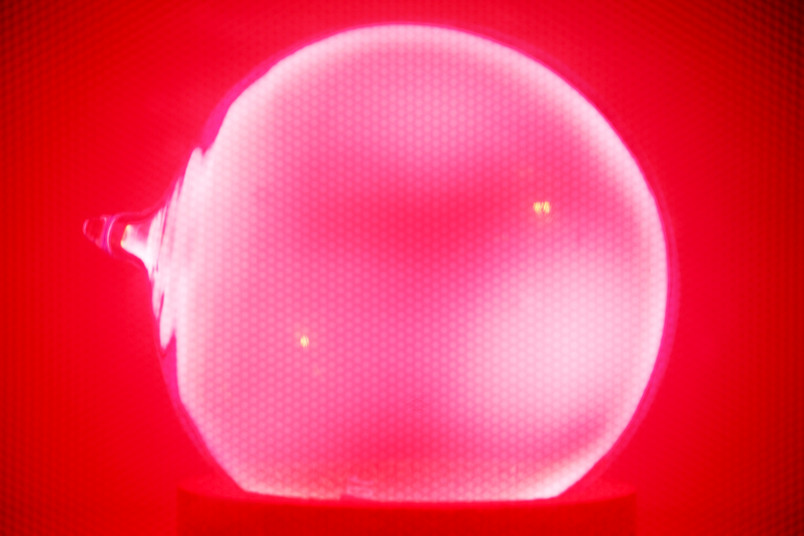
Gaseous Electronics Conference (GEC)
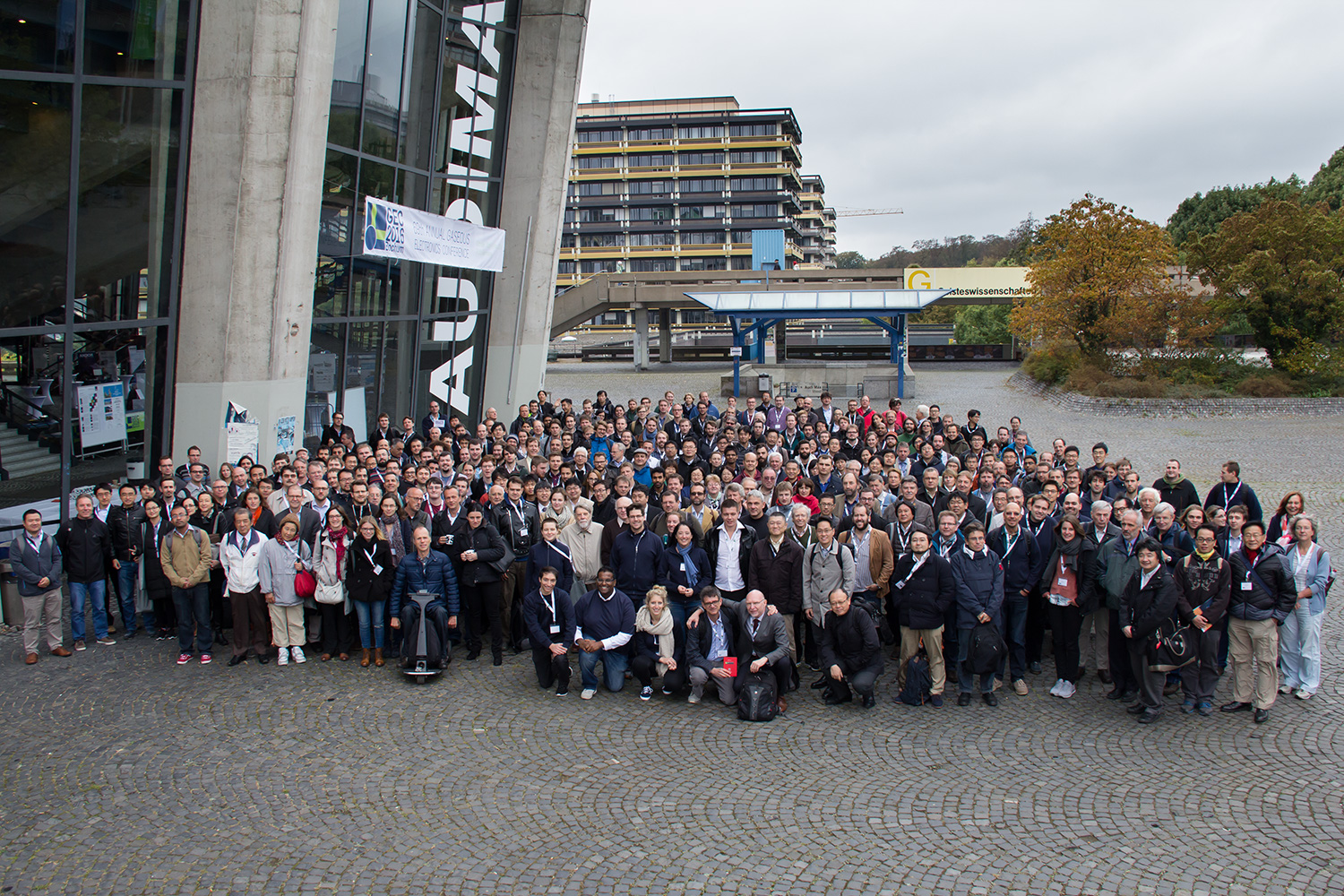
It is one of the world's largest plasma conferences and is normally only held in convention centers or hotels. In Bochum, the Gaseous Electronics Conference will be held for the first time on the campus of a university.
The organizers of this year's Gaseous Electronics Conference, or GEC for short, are expecting around 450 international participants. The 69th edition, which will take place from October 10 to 14, 2016 at the Ruhr University Bochum (RUB), is thus expected to be the largest GEC ever.
The logistical and planning challenge includes, for example, 64 invited and 222 submitted talks, 262 poster contributions, a conference dinner at the Henrichshütte in Hattingen, a show at the Planetarium Bochum, laboratory tours at the RUB, a concert at the Audimax, a visit to the Botanical Garden, and an accompanying industrial exhibition with more than 20 companies.
Not in the USA for the fourth time only.
The organizer is the American Physical Society (APS). The meeting is organized locally by the Research Department "Plasmas with Complex Interactions" at RUB, in particular by Prof. Dr. Uwe Czarnetzki and his team.
"For only the fourth time in its nearly 70-year history, the meeting has not been held in the USA," explains Czarnetzki. "And for the first time ever, the meeting venue is the campus of a university. We are proud to have brought the GEC to Bochum." Last year, experts in plasma physics and technology met at the Honolulu Convention Center in Hawaii.
Plasmas are extremely versatile
In terms of content, the focus is on so-called low-temperature plasmas and the associated atomic and molecular physics. These are partially ionized - electrically charged - gases. They are characterized by high conductivity. They also exhibit unique chemistry and interaction with surfaces.
Their applications are broad, ranging from lighting to cancer treatment. Low-temperature plasmas can be used to coat, activate and clean surfaces, produce gas lasers and semiconductor devices, or disinfect medical equipment. They are also used in wound healing.
Broad and well positioned: Plasma research in Bochum
"Research and development are often interdisciplinary and primarily encompass physics, electrical engineering, chemistry - and more recently biology and medicine," like this. The Bochum Research Department Plasmas with Complex Interactions is correspondingly broadly positioned.
"The RUB has long been one of the world's strongest research universities in the field of plasma physics and technology and therefore enjoys an excellent international reputation," says Czarnetzki. Scientists from various faculties cooperate across disciplines in the Plasma research focus: a total of 23 chairs and research groups with more than 300 employees from physics and astronomy, electrical engineering, chemistry, biology and mechanical engineering.
Prof. Bernhard Unterberg "Hotter than the Sun"
On November 3, Prof. Bernhard Unterberg will give a lecture on "Hotter than the Sun" as part of the "All Plasma" lecture series. This will take place at Blue Square starting at 18:00. Interested parties are welcome to attend!
A new primary energy source modeled on our sun - to realize this vision, plasmas with extreme temperatures of 150 million degrees Celsius must be confined. This is already possible today with the help of magnetic fields, and now fusion researchers are building the fusion experiment "ITER" (lat. the way), in which 500 MW of fusion power will be generated for the first time.
In this lecture, we will explain the physical principles of fusion in magnetically confined high-temperature plasmas and what challenges have to be overcome on the way to a fusion reactor - especially with regard to the wall materials, which have to withstand the highest stresses in the fusion reactor.