
Bochumer young researchers at WELTPP-21
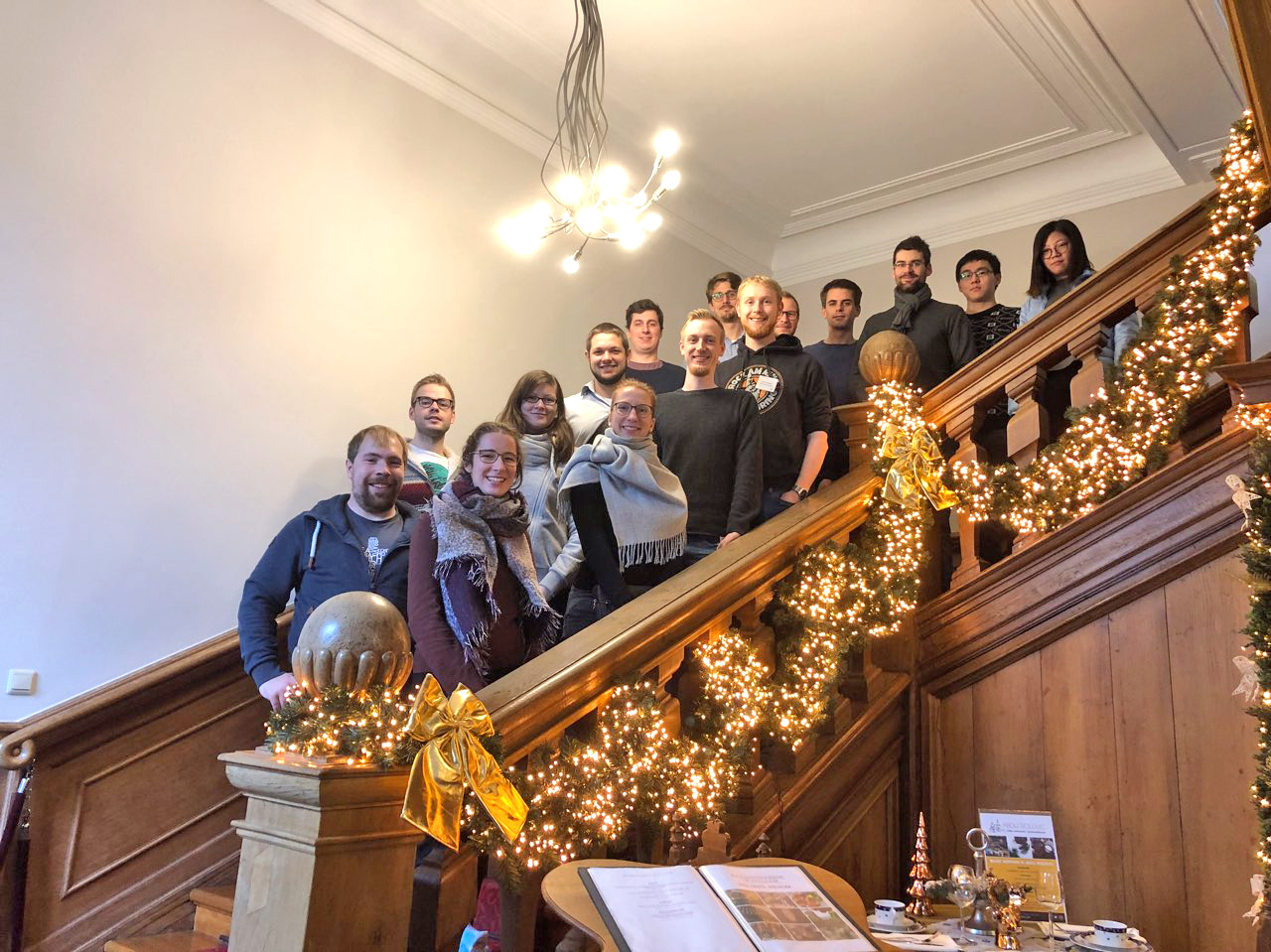
The annual workshop on the exploration of low-temperature plasma physics (WELTPP) was held on the 29th & 30th of november for the 21st time in Rolduc, Kerkrade. PhD students from both the SFB TR-87 and the CRC1316 contributed to the program with 6 talks and 9 posters. In addition to the student talks, Erik Neyts from the University of Antwerp gave an invited talk about the surface charge in plasma catalysis.
Plasma Day 2018
On Monday, November 12th, 2018, the Plasma Day of the Research Department Plasmas with Complex Interactions took place. The focus of the Plasma Day was the strategic progress of the Research Department in the future. The spokesperson, Achim von Keudell, spoke about the current situation of the Research Department. Further, representatives of all three topic fields of the Research Department presented their progress and future perspective. Moreover, highlight presentations were given by Jens Kleimann from the physics faculty, Andrew Gibson and Julian Schulze from the electrical engineering department.

Ultra-thin transparent silver layers for solar cells
New chemical precursor
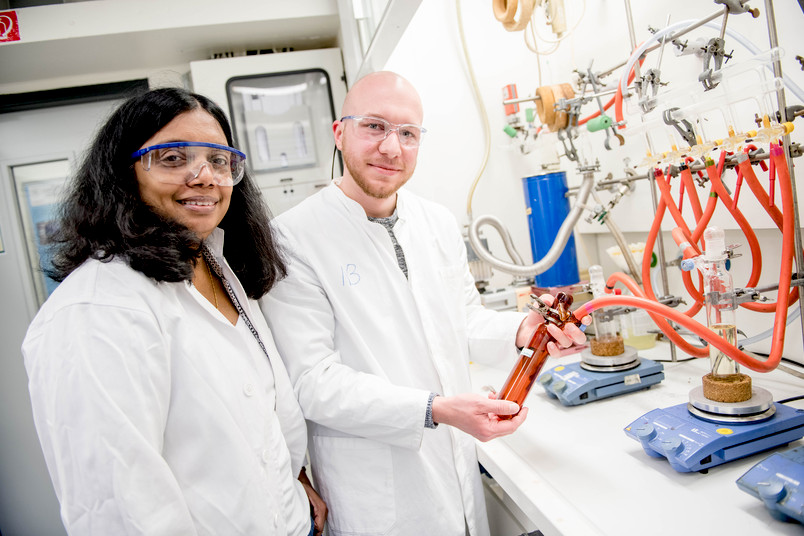
"The precursors for the deposition of ultrathin silver layers are extremely sensitive to air and light," explains Nils Boysen. It is true that the precursors can be stabilized with fluorine, phosphorus or oxygen. "However, these elements contaminate the thin film and pollute the equipment used to produce the layers," the researcher continues. As part of his master's thesis, Boysen and colleagues developed an alternative for stabilization.
The scientists designed a chemical silver precursor in which the silver is packaged in an amide and a carbene, thus eliminating the need for stabilization with fluorine, phosphorus or oxygen. They showed that the new precursor can be used to deposit thin silver layers on an electrode. To do this, they used atomic layer deposition. In the process, the precursor is transported to the electrode in gaseous form and deposited there as a silver layer just a few atoms thick. Because the silver film is so thin, it is transparent.
"Since the process works at atmospheric pressure and low temperatures, the general conditions would be favorable for industrial production," says Anjana Devi.
Prospect of high-efficiency solar cells and lights
With a series of tests, the researchers demonstrated that the silver thin films produced with the new process are pure and electrically conductive. "From a process engineering point of view, the successful synthesis of the new precursor opens the door to realize ultrathin silver films," Thomas Riedl sums up. "They hold out the prospect of producing new electrodes for highly efficient solar cells and lights."
"The interdisciplinary collaboration between the Bochum materials scientists and the Wuppertal engineers was the key to success," says Anjana Devi.
adapted from Julia Weiler (RUB)
Poster Prize for Patrick Preissing (A6) at the 8th International Workshop on Plasma Spectroscopy in Oxford
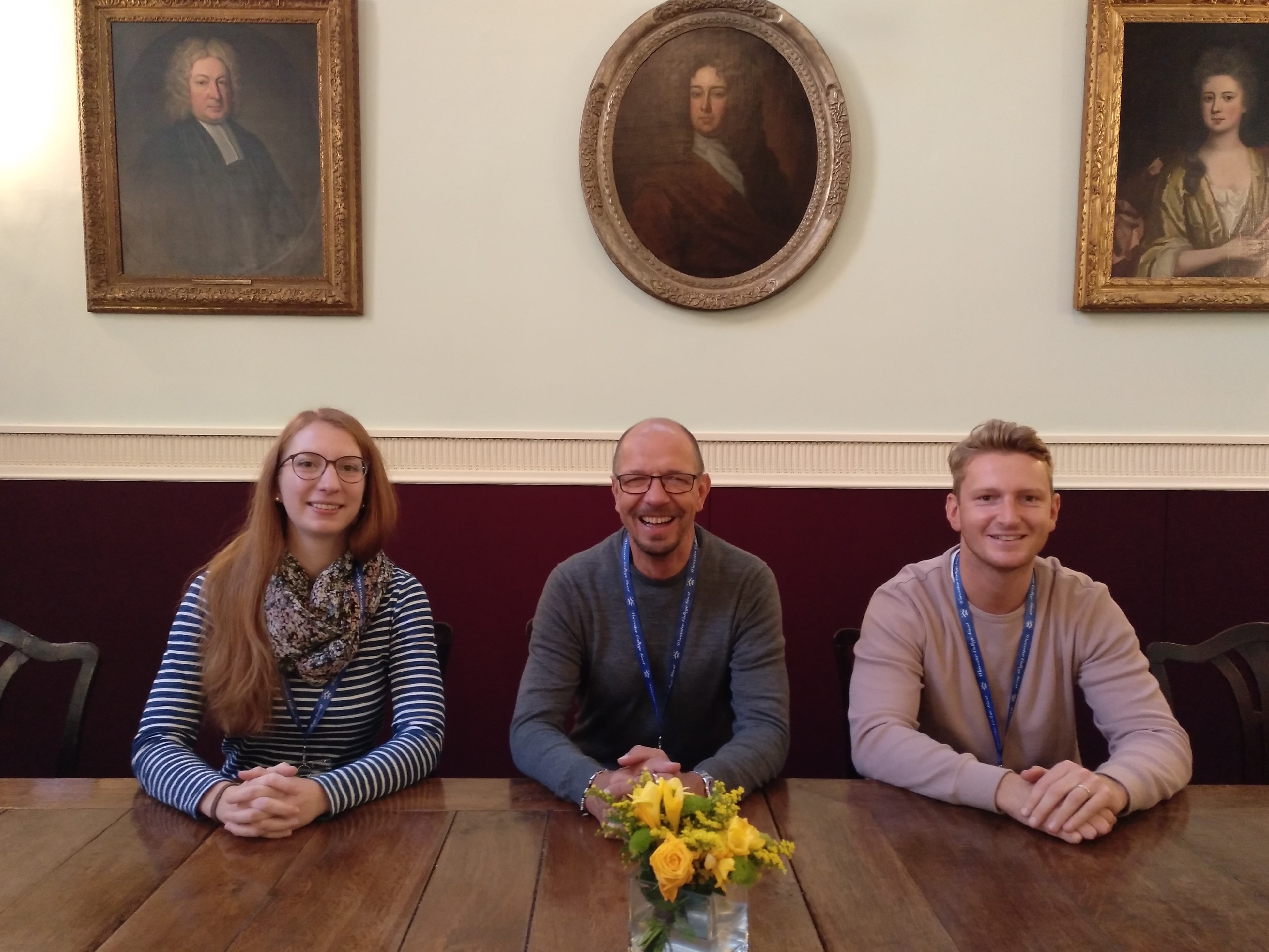 The 8th International Workshop on Plasma Spectroscopy was held from the 23-26th of September, 2018 at the Worcester College in Oxford, UK. Volker Schulz- von der Gathen, Patrick Preissing and Katharina Grosse from EP2 contributed with 2 talks and 3 poster presentations. One of two poster prices were won by Patrick Pressing which was announced during the conference dinner. The excursion to Blenheim Palace was a highlight of the conference next to the excellent scientific programme.