
Astronomy
Prof. Dr. Judith Irwin 
From September to November 2016, Prof. Dr. Judith Irwin from Queen's University in Kingston, Canada visited the Chair of Astronomy of Prof. Dettmar. In the context of this, she gave a colloquium lecture.
Title: Radio Circular Polarization in the Nuclei of Nearby Galaxies
Abstract: Circular polarization is technically difficult to measure in astrophysics, due to the weakness of the signal. Very few sources have had confirmed circularly polarized signals, but the scientific payoff can be significant, especially the potential insight that such observations provide on the nature of Active Galactic Nuclei.
This talk will review observations of circular polarization in nearby systems, as well as present some new results from CHANG-ES (Continuum Halos in Nearby Galaxies -- an EVLA Survey). A close look at circular polarization is especially timely now that we are approaching the era of the Square Kilometre Array.
link to Kolloquium RUB Physik
Both collaborate in the CHANG-ES project, which has the following scientific objective:
Magnetic fields are spread over the whole universe. Galaxies as well as galaxy groups and cluster exhibit magnetic fields. In Fig. 1 the magnetic field lines of an edge-on spiral galaxy is shown. In Fig. 2 the same is shown for a face-on spiral galaxy. One of the main fields of interest of modern astrophysics is to find the origin and mechanisms of the observed cosmic magnetic fields on galactic and cosmological scales.
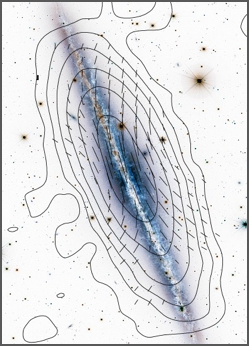
Fig. 1, Left: Edge-on spiral galaxy NGC 891 (total and polarized intensity), observed with the Effelsberg telescope at 8 GHz (3.6 cm wavelength) Optical background image: CFHT/Coelum
© M. Krause (MPIfR Bonn)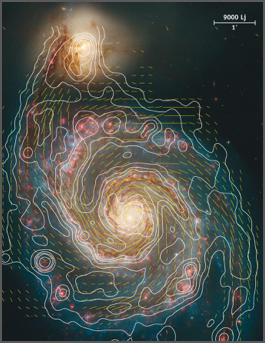
Fig. 2, Right: Spiral galaxy M51 (total and polarized intensity), combined from data observed with the interferometric radio telescope Very Large Array (VLA, USA) and the Effelsberg 100m single-dish radio telescope (Germany) at 5 GHz (6 cm wavelength), Optical background image: Hubble Space Telescope (Hubble Heritage Team)
© A. Fletcher (MPIfR Bonn)
The Galaxy survey “Continuum HAlos in Nearby Galaxies – an Evla Survey (CHANG-ES)“ was observed at the Expanded - Very Large Array (E-VLA Radiotelescope), New Mexico, USA (Fig. 3). It contains a galaxy sample of significant size over a variety of angular spatial scales, which will help to address fundamental questions regarding radio halos and magnetic fields in spiral galaxies. The PI of this Project is our VIP of the Ruhr-University Bochum Judith Irwin.
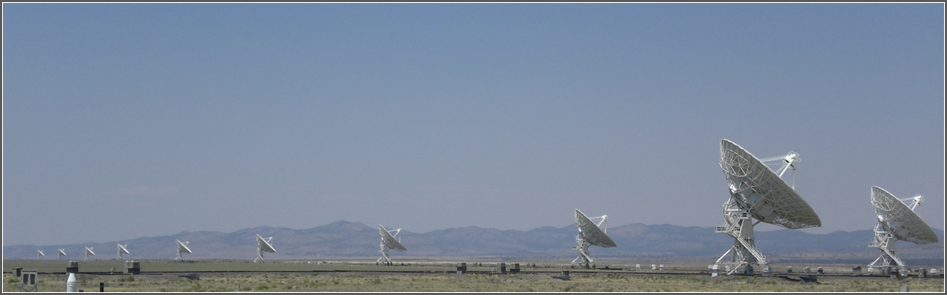
Fig. 3: Expanded - Very Large Array (E-VLA Radiotelescope), New Mexico, USA.
©Yelena Stein
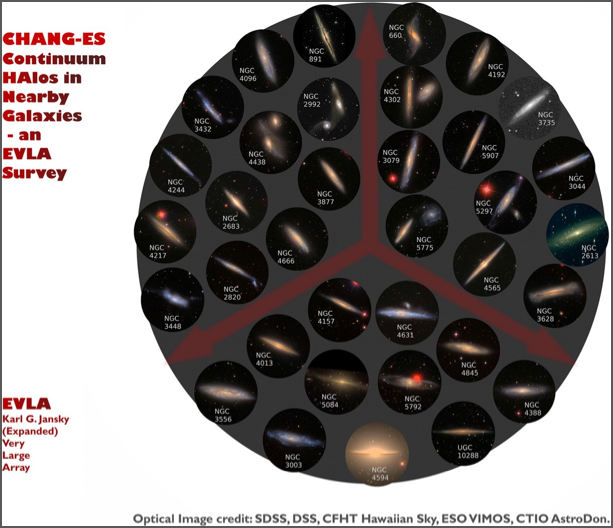
The CHANG-ES sample of 35 galaxies are all edge-on spiral galaxies with a certain luminosity and size. In Fig. 4 you see all the galaxies.
 The galaxies were observed at the two low frequencies, 1.5 GHz (20 cm wavelength) and 6 GHz (6 cm wavelength) in the radio regime to get a low contribution of thermal emission and to carry out a technique called “Faraday rotation analyses” in galaxy disks and halos. CHANG-ES can also exploit the wide bandwidths that are provided by the EVLA. These wide bandwidths permit enormous improvements in continuum sensitivity. In addition, the wide bands provide a wealth of spectral information that will be unique to this survey. Moreover, CHANG-ES is the first survey of edge-on galaxies for which all polarization products will be obtained, providing important information on halo magnetic fields (Irwin et al. 2012).
Fig. 4 CHANG-ES logo.
EP2
14.11.2016 - Dr. KATEŘINA HERYNKOVÁ
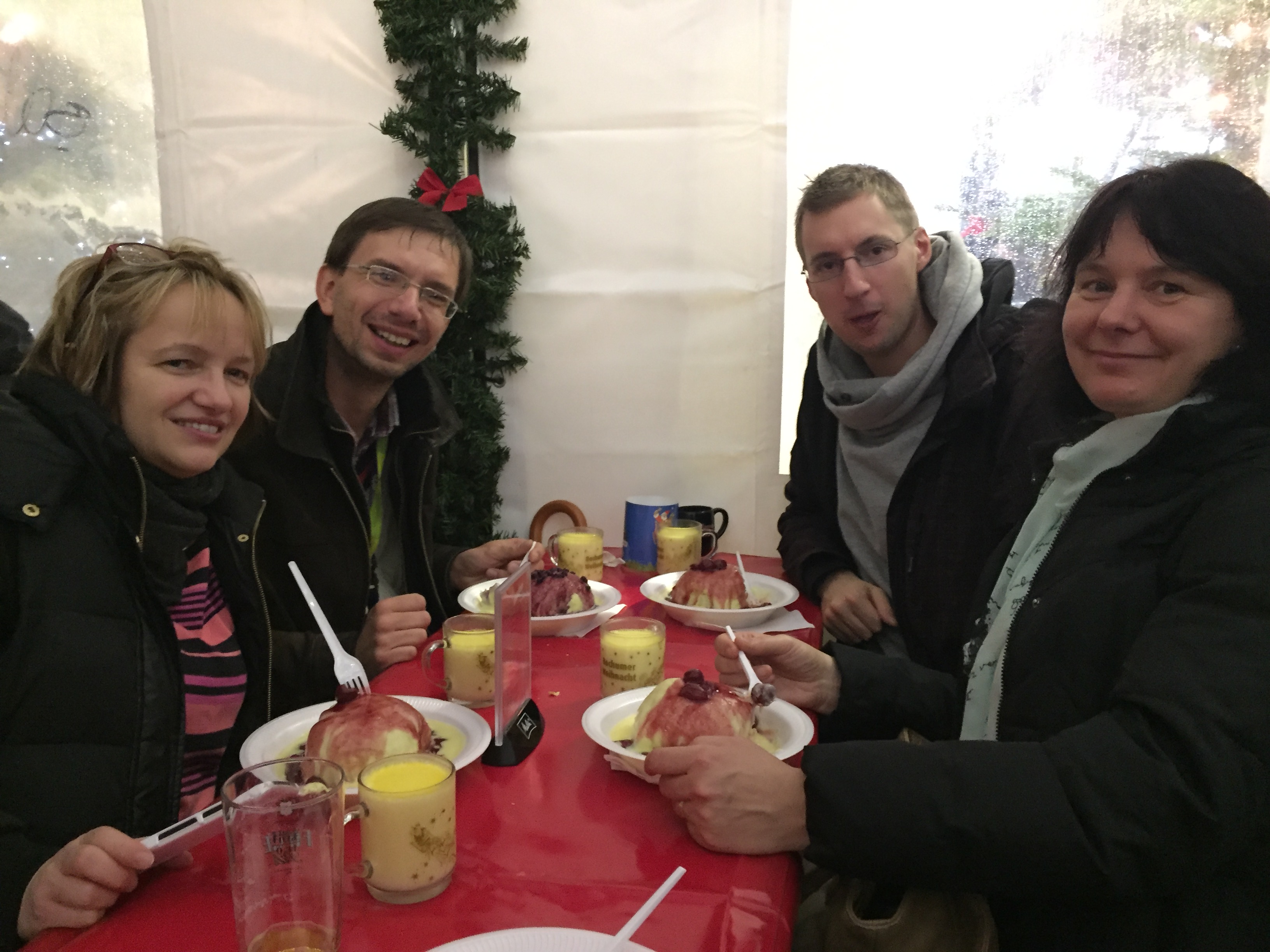
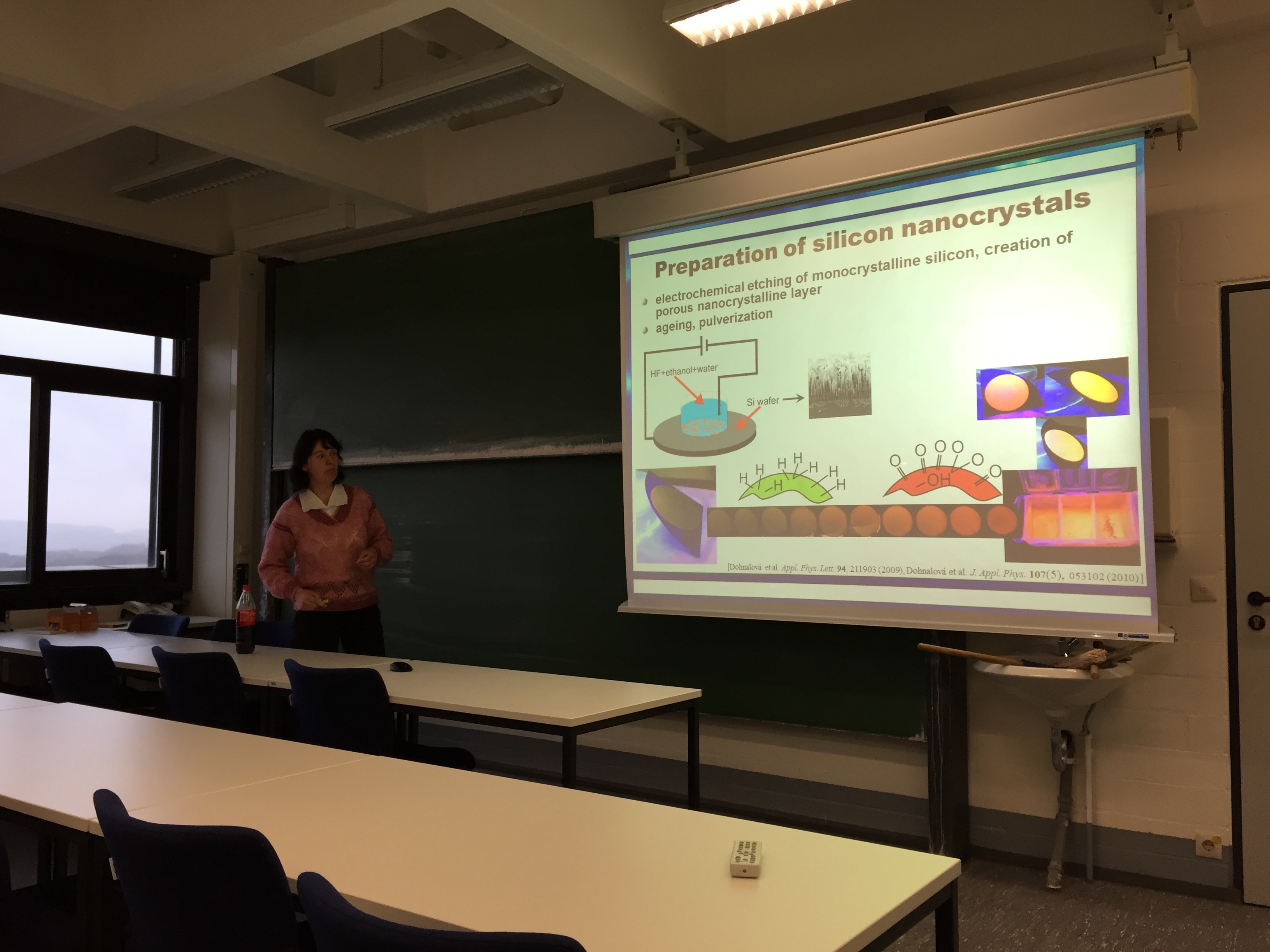 Dr. Kateřina Herynková, Martin Müller und Dr. Ondrej E. Cibulka vom Department of Thin Films and Nanostructures, Institute of Physics, Academy of Sciences of the Czech Republic, Prague, Czech Republic waren zu Gast bei Jun.-Prof. Dr. Jan Benedikt. Im Rahmen dessen hielt Dr. Kateřina Herynková einen Vortrag über "Luminescing silicon nanoparticles for optoelectronic and biological applications". Außerdem wurde der Bochumer Weihnachtsmarkt besucht.
Abstract: Silicon nanoparticles have potential application in so-called all-silicon optoelectronics or in biology as luminescent markers or optically controlled drug delivery. Silicon nanocrystals having 2-3 nm in size show visible luminescence due to the quantum confinement effect and organic (methyl) capping of the nanoparticles can enhance luminescence efficiency up to 20%. The native indirect bandgap of the silicon is in tensile-strained nanoparticles switched to direct bandgap behavior. By modifying the preparation conditions of the highly porous silicon we obtain hydrophilic nanoclusters suitable for biological research, however, the nanoparticles tend to agglomerate. Study of their toxicity showed better viability of the cells in comparison with diamond nanocrystals.
AEPT
19.01.2017 - Prof. Dr. Joost van der Mullen
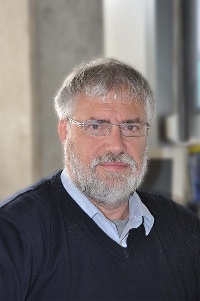
Vom 06. bis 09. Februar 2017 wird Joost van der Mullen, emeritierter Professor der Technische Universiteit Eindhoven einen Workshop zum Thema "Plasma Characterization and classification using the method of disturbed Bilateral Relations" an der Ruhr-Universität Bochum halten. Prof. van der Mullen ist auch nach seiner Emeritierung weiterhin aktiv in der Forschung tätig und derzeit an der Universiteit Antwerpen an der Fakultät für Chemie beschäftigt. Sein Workshop wird voraussichtlich von 09 bis 17 Uhr in ID 03/653 stattfinden.
Title: Plasma Characterization and classification using the method of disturbed bilateral relations.
Abstract: The aim of this lecture-block is to provide a common basis for engineers, experimentalists, theoreticians and users of plasma sources. This will be done by presenting a plasma classification/characterization tool based on the many aspects of equilibrium departures in plasmas. This leitmotiv is chosen because non-equilibrium is the essential reason behind the success of high-tech plasmas physics. Plasmas can generate large fluxes of photons and radicals but these effluxes will create deviations from the equilibrium.
To find our way in the wilderness of plasma features and sources we will use the method of disturbed Bilateral Relations (dBR), which relates equilibrium disturbing to equilibrium restoring mechanisms. In that way it generates validity-criteria and predicts trends in the deviations from equilibrium. The basic idea of the dBR method is that “equilibrium” has many features, which can be described by specifying the underlying balances of (de)excitation ionization/recombination, absorption/emission etc.. Equilibrium-departure has also many aspects. This can be caused by the efflux of heat, photons and/or (charged) particles.
Several different types of plasmas will be dealt with in various case studies. The tight relation between the (simplified) theory and spectroscopy will be highlighted. Apart from passive spectroscopy (Optical Emission Spectroscopy) we will also give examples of active (laser) spectroscopy like Thomson scattering.
The use of complicated formulas is avoided; the number of equations will be limited.
Constitutive meeting of the research group FOR1123 "Physics of Microplasmas
On January 12, 2009 the constituent meeting of the research group FOR1123 "Physics of Microplasmas" has been held at the Ruhr-University Bochum. Prof. Jörg Winter was elected speaker of FOR1123, Prof. von Keudell was elected deputy speaker. PIs are also Prof. Peter Awakowicz, Dr. Jan Benedikt, Prof. Ralf Peter Brinkmann, Prof. Uwe Czarnetzki, Dr. Dirk Luggenhölscher, Dr. Thomas Mussenbrock, Dr. Volker Schulz-von der Gathen and Dr. Ilija Stefanovic.
More information about the research group can be found at hier.
http://www.for1123.rub.de/FG1123/