
CRC 1316 participated at IWM 12 in Orleans
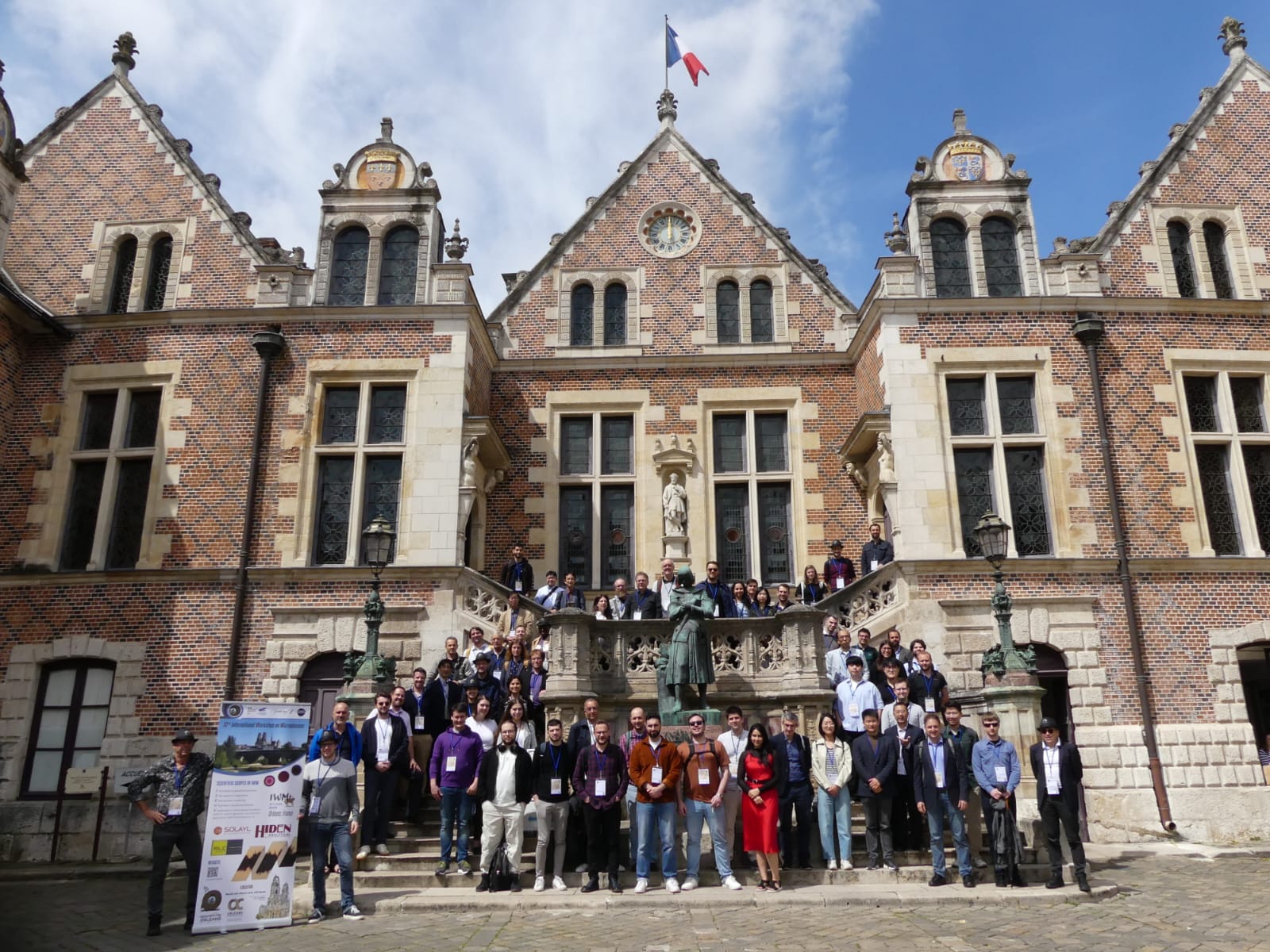 The 12th International Workshop on Microplasmas in 2024 has been held in Orleans, France, from June 3rd to 7th. One Invited, five Contributed talks, and two posters were presented by scientists from Ruhr University Bochum. The conference venue was the Museum Des Beaux-Arts with a nice location and environment in the centre of Orlean. The workshop covered wide topics on the microplasma sources and their generation in the gas phase or liquid dealing with interface behaviour from one side and diagnostics of microplasma sources and their application in material processing, plasma medicine, agriculture, etc. The modeling section provides research on the numerical simulation of streamer dynamics to the 0D Global kinetic model. Very insightful talks and discussions which in the end led to the overall view of microplasma's fundamental aspects and their application.
Laboratory stay in the USA
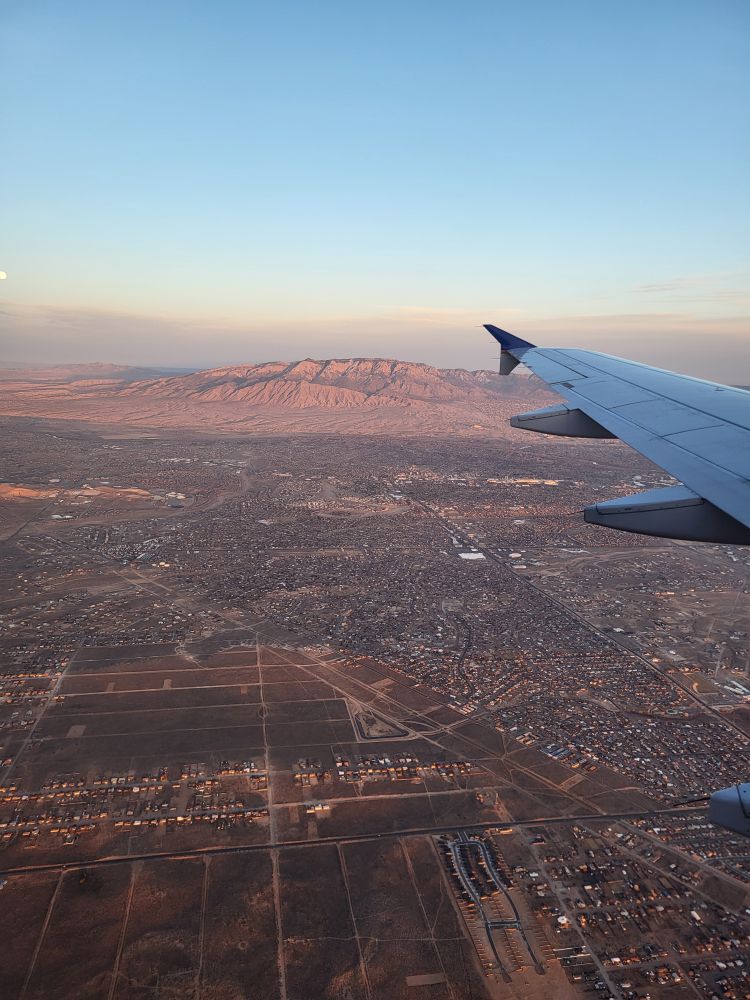 As part of his PhD, PhD student David Steuer (project A6) is spending nine weeks at the Sandia Plasma Research Facility (PRF) in Albuquerque, New Mexico, USA. Researchers can apply at PRF to submit project ideas. After a successful review process, there is then the option of using one of the excellently equipped laboratories or handing over the experiment to the cooperation partner.
The PRF also offers simulation capacities. In David's project, atomic oxygen densities are to be measured within a microcavity plasma array. A state-of-the-art picosecond laser system from the PRF can be used for this purpose.
The stay was funded by the Research School of the Ruhr-Universität Bochum (PRINT programme) and the CRC 1316.
Understanding the theory of particles in plasmas
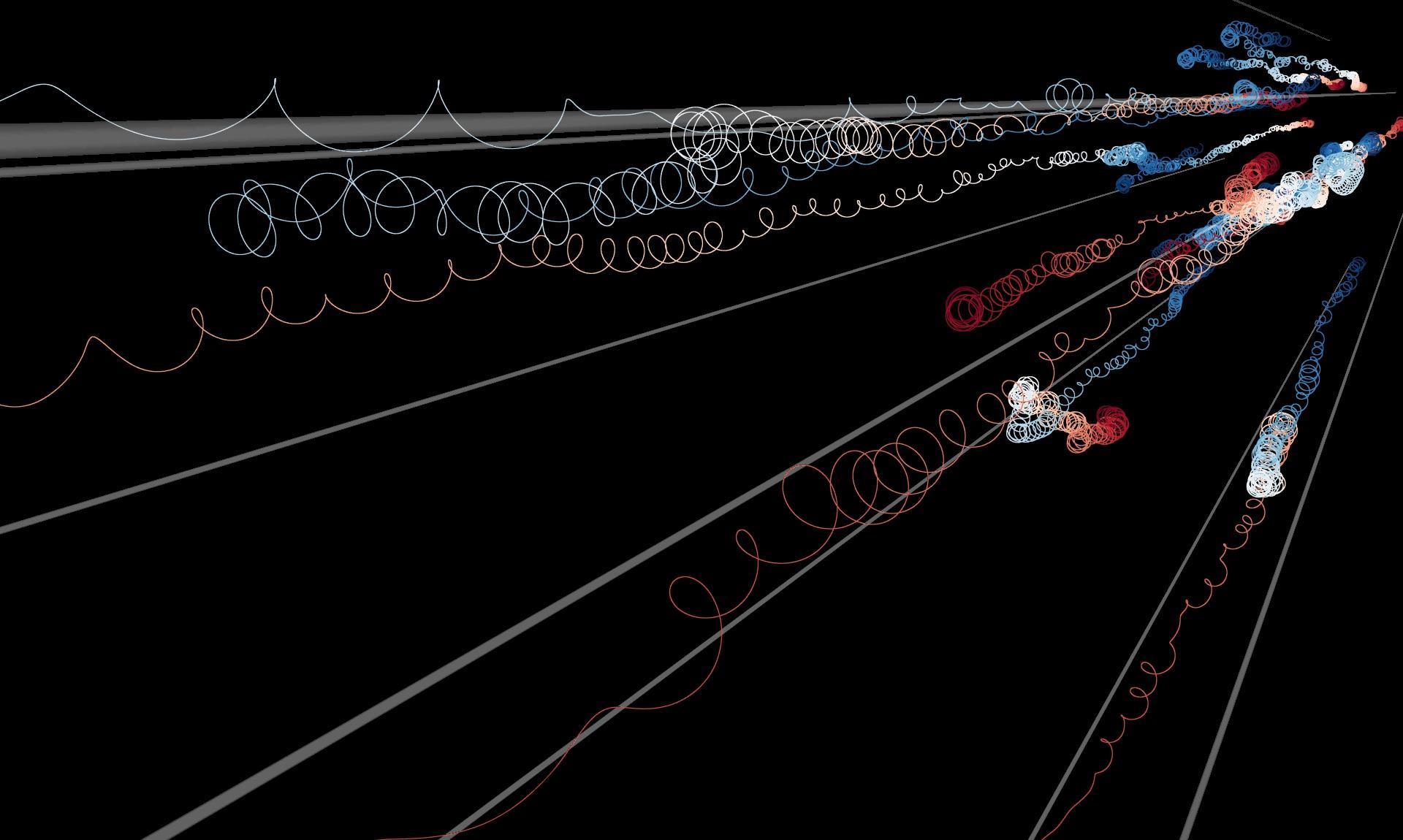 On Monday, January 22nd, scientists meet at RUB for the yearly meeting "Plasma and Particle Theory Day" to discuss the theory of particles in plasmas. Understanding the collective behavior of ionized particles is in the focus of research. A particular challenge is to understand how physical collisions of particles and the interactions between ions and electromagnetic fields are included in the various equations to describe the systems. In astrophysics, often these equations are dominated by the interaction of particles with electromagnetic waves. This is the research focus of the Collaborative Research Center SFB1491, "Cosmic Interacting Matters - From Source to Signal", centered at RUB. The research department of Plasmas with Complex Interactions also hosts SFB1316, "Transient Atmospheric Plasmas: From Plasmas to Liquids to Solids". Here, non equilibrium processes in atmopsheric plasmas for species conversion are the topic of research. Compared to astrophysical plasmas, these atmopsheric plasmas are very dense and physical collisions dominate the equations. It is the goal of the Plasma and Particle Theory day to move toward exploring the region in which both terms play a significant role. This is for instance the case in molecular clouds in the Milky way, in which the degree of ionization is as low as ~30% and naturally, collisions become important in the description. Another example is the physics of lightning that can be tested in the plasma lab and for which a briding theory is needed to understand the physics of atmospheric lightning. Once the particle interactions become inelastic, i.e at high energies or at extreme densities like they exist in neutron stars, the classical description needs to be replaced by the quantum mechanical one. Scientists therefore discuss the different methods, how synergies can be build and what the next steps are to build a consistent framework to combine classical and quantum-mechanical interactions.
Figure: Lukas Merten, TP4, RUB
Navigating New Frontiers in Fusion: ITER's Material Evolution
Boronization: A Three-Decade Journey Professor Jörg Winter's pioneering technique, "boronization," takes center stage as a key player in this evolution. Developed over three decades, this plasma-chemical process involves coating surfaces with a thin boron layer. Professor Winter's recent insights shared at ITER shed light on the principles and challenges of this technique, adding depth to the ongoing fusion discourse.
Discover more about this Fusion Evolution: Link to the full article