
Small spheres save enzymes for biocatalysis
Plasmas can supply the co-substrate for the biocatalysis of valuable substances, but pity the enzymes. If the latter are attached to small spheres, they work protected and up to 44 times longer.
Some enzymes, such as the one from fungi studied here, are able to produce valuable substances such as the fragrance (R)-1-phenylethanol. To do this, they convert a less expensive substrate using a cosubstrate. A research team from the Department of Biology at Ruhr-Universität Bochum came up with the idea of supplying them with this cosubstrate via a plasma - a crazy idea, as plasmas generally have a destructive effect on biomolecules. However, using several tricks, the researchers led by Prof. Dr. Julia Bandow and Dr. Tim Dirks succeeded. They have now refined one of these tricks and thus improved the process: they attach the enzymes to small balls to hold them to the bottom of the reactor and like this protect them from the harmful influence of the plasma. By choosing the most suitable type of ball, they were able to increase the stability of the enzyme 44-fold. They report in the Journal of the Royal Society Interface from October 25, 2023.
Model enzyme from an edible mushroom
"In plasma-driven biocatalysis, we want to operate enzymes that use hydrogen peroxide to convert a substrate into a more valuable product using technical plasmas," explains Julia Bandow, Head of the Chair of Applied Microbiology. The plasmas - energetically charged gases - produce hydrogen peroxide as well as a variety of reactive species.
The researchers use the non-specific peroxigenase (AaeUPO) from the edible fungus Agrocybe aegerita as a model enzyme. In initial studies, they were able to show that although plasma-driven biocatalysis works with it, there are also key limitations. "The decisive factor was that the enzymes react sensitively to the plasma treatment and are therefore inactivated within a short period of time," explains Tim Dirks, first author of the current study. "To prevent this, we use the method of enzyme immobilization, i.e. attaching the enzymes to so-called beads: small spheres with a porous surface."
Spheres keep the enzymes at the bottom
Due to gravity, these spheres lie on the bottom of the sample and provide a protective zone between the plasma phase at the top and the enzymes. The research team observed early on that the choice of different immobilization methods also led to different survival rates of enzymes. The aim of the current study was therefore to investigate the effect of different immobilization methods on the plasma stability of enzymes using a larger selection of enzymes.
Five different enzymes were selected, two of which also convert hydrogen peroxide and three of which do not require hydrogen peroxide for their activity. The researchers tested nine different types of beads, some of which had a resin surface and others a silica surface with or without a polymer coating. After immobilization, the enzymes were treated with plasma for up to five minutes. The researchers then compared their residual activity with untreated controls.
The path to new applications
The beads with resin surfaces showed the best results for all five enzymes. "The amino and epoxy-butyl beads performed best," like these," says Tim Dirks. In both cases, the enzymes form a strong, covalent bond with the carrier material, which cannot be dissolved. "This type of immobilization appears to limit the mobility of the enzymes, which makes them less susceptible to plasma-induced inactivation," concludes Tim Dirks. The team extended the plasma treatment times for the most promising candidates to up to one hour and, like this, was able to increase the stability of the enzymes under plasma treatment by up to a factor of 44 through immobilization. "The findings of this study thus pave the way for new applications that aim to combine enzymes with technical plasmas in the future," the researchers like this.
adapted from Maike Drießen, RUB
Purple flashes on the skin
Cold plasma has an antimicrobial and anti-inflammatory effect. This has also been shown by studies at Ruhr University. Promising applications in medicine and cosmetics are now emerging.
Fine purple lightning flashes through the darkness of the laboratory. It crackles quietly. The flashes are generated inside a 12-by-12-centimeter plasma reactor. After just a few microseconds, the spectacle is over. "This is ionized, particularly high-energy gas or plasma. Most people are familiar with this colourful phenomenon from auroras, which are nothing more than gaseous plasma," says Dr. Friederike Kogelheide from the Chair of Applied Electrodynamics and Plasma Technology at Ruhr-Universität Bochum. "Plasma can be described as the fourth state of matter after solid, liquid and gaseous. There is thermal and non-thermal, i.e. cold plasma," Kogelheide continues like this. The electrical engineer dealt with the latter in her doctoral thesis. It is characterized by a particularly low temperature - at least in comparison to other plasmas, which can reach temperatures of several thousand degrees Celsius. "Cold plasma corresponds approximately to our body temperature, i.e. just over 30 degrees Celsius, and is therefore skin-friendly," explains Kogelheide. Kogelheide has studied the influence of cold plasma on human skin cells, or more precisely, its antimicrobial effect. Her research findings have also led to the founding of her start-up Glim Skin.
For around ten years, researchers in biology, chemistry, medicine and electrical engineering have been investigating the use of cold plasma in medicine. There is great promise here, particularly in the field of wound care and healing. "Studies like this have already shown that molecules produced by plasma, such as nitric oxide, can accelerate wound healing. The beneficial effect of cold plasma is also attributed to the ozone concentration and UV radiation in the plasma," explains Kogelheide. Another advantage of cold plasma is that it corresponds to the body's own temperature and can therefore be applied to human skin both painlessly and without contact. Great hopes are therefore being placed in plasma research.
Fighting resistant bacteria
In order to investigate the antimicrobial effect of cold plasma, the interdisciplinary research team in Bochum led by Kogelheide experimented with spores. "We mainly investigated the effect of plasma on so-called Bacillus subtilis spores. These bacteria are known to be particularly resistant; they can even survive in permafrost. They are therefore considered the gold standard in experiments," explains Kogelheide. The researchers' aim was to specifically reduce and completely kill the spores using cold plasma.
We proceeded in small steps.
– Friederike Kogelheide
"We proceeded in small steps," like this," says Kogelheide. "Our main focus was on the biological substances and building blocks produced by the cold plasma, such as UV radiation, ozone concentration and nitrogen monoxide. How much of this does our plasma produce? Do the spores continue to grow after treatment with plasma? What dose destroys the spores? And what part does the ozone play in this?" Kogelheide's team repeatedly checked and changed the composition of the gas mixture, the treatment time and intensity. Measurements were made using emission and absorption spectroscopy.
The result: it was not the individual components, but only the interaction of ozone, UV radiation and nitrogen monoxide that led to the inactivation of the spores. "The individual components alone had no effect. This is because the substances form a synergy. Another interesting finding was that a natural humidity of around 45 percent relative humidity promoted inactivation," explains Kogelheide.
Lower risk of infection
With their findings, the Bochum researchers have once again provided proof that cold plasma has an antimicrobial effect. They were also able to confirm that plasma produces nitric oxide, which can close wounds. "If we could replace wound healing creams with plasma treatment in the near future, that would be a huge advantage," says Kogelheide. This is because cold plasma can be applied without contact. "In contrast to creams, the risk of infection is significantly lower with plasma applications," explains the scientist.
Plasma flashes in hospital
Anti-inflammatory, wound-healing, antimicrobial: even though plasma research is still in its infancy, promising areas of application are already emerging. "Companies are already waiting in the wings to invest capital in the approval of plasma-based medical products by health insurance companies," observes Kogelheide. At some point, it may be a matter of course that the purple plasma flashes will be flashing through all hospitals.
adapted from Lisa Bischoff (RUB)
Radio2023 Conference: Advancements and Challenges in German Radio Astronomy
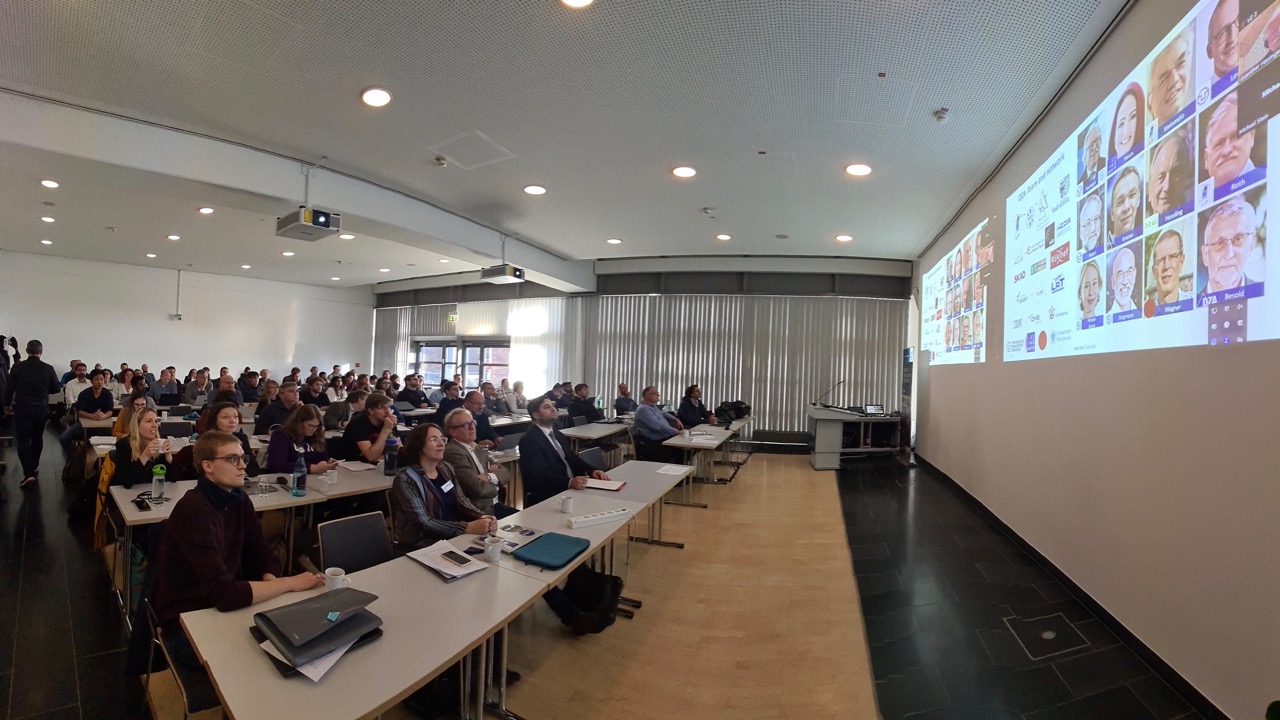
The "Radio2023" conference recently convened at Ruhr University Bochum, offering insights into the progress and challenges within German radio astronomy. One hundred astronomers attended the event which facilitated collaborative discussions focusing on exciting new scientific results as well as innovative strategies for managing complex data sets from telescopes like LOFAR, MeerKAT, SKAO, DSA2000, and ngVLA.
Highlighting the importance of existing telescopes, including LOFAR and MeerKAT, as foundation to future instruments, the conference emphasized the need for novel approaches for data processing and storage.
The conference served as a crucial platform for operators of national data centers to discuss technical requirements and assess the feasibility of upcoming projects.
In summary, "Radio2023" provided a forum for fruitfully discussing current achievements, future opportunities, and challenges within German radio astronomy, ensuring a collaborative and informed approach to advancing the field.
Judith Golda joins AVS 69th International Symposium
Judith Golda, representing CRC 1316, captivated audiences at the AVS 69th International Symposium in Portland, Oregon, from November 5-10, 2023. Her invited talk, "Fundamentals of atmospheric pressure discharges for plasma catalytic applications," highlighted the critical role of atmospheric pressure discharges in plasma catalysis. Her presentation presented theory and application, emphasizing the transformative potential of understanding these discharges for catalytic processes in industries, environmental remediation, and energy production.