
Diagnostics and applications of plasma beams as a CO source for biomedical applications
Funding source: DAAD
Project ID: 57512561
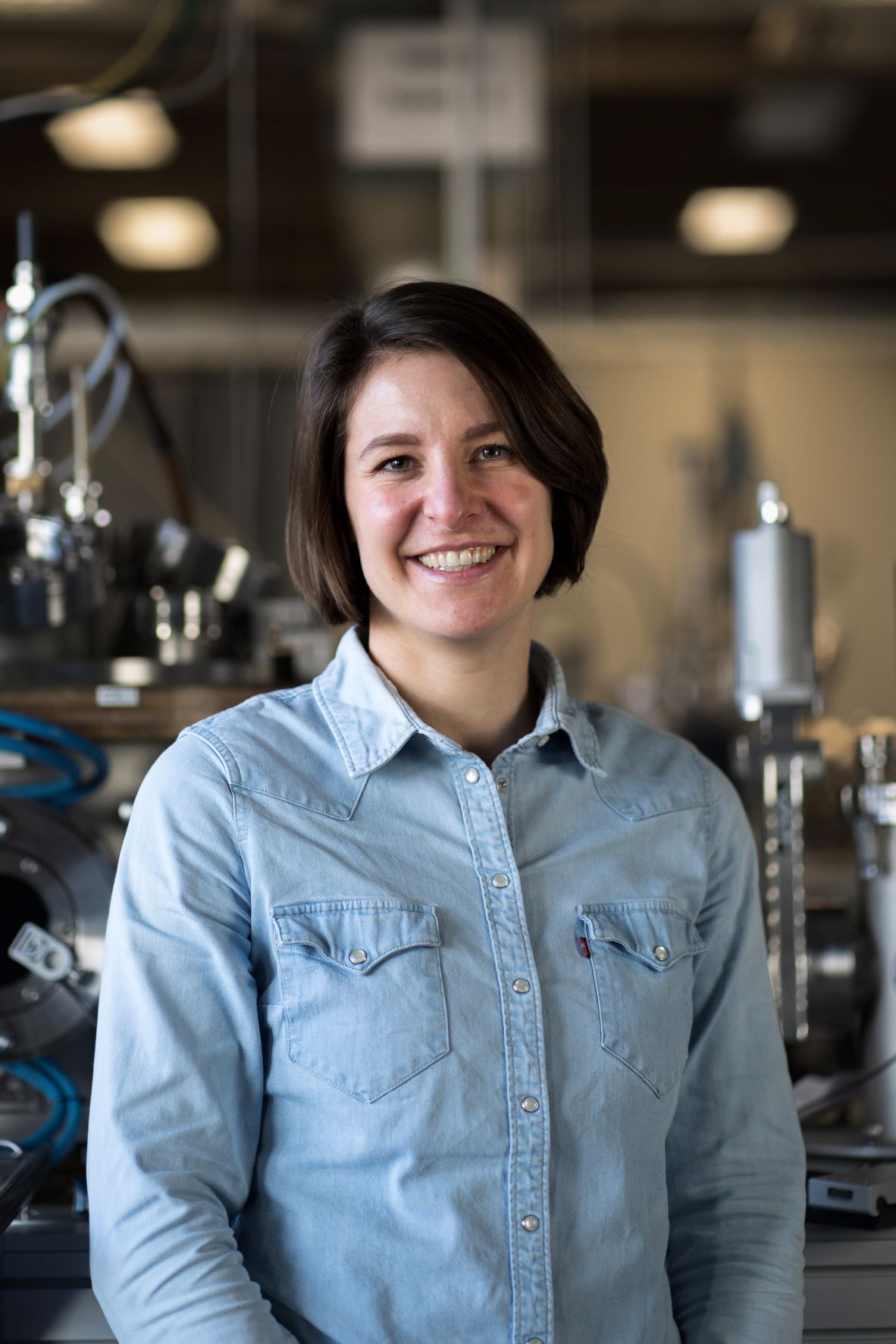
Project leader: J. Golda, C. Douat, GREMI, Orléans
Funding time period: 01/2020 – 12/2021
Team
Description
Project-based personnel exchange program with France.
2019 - 2022
Forlab PICT2DES
The use of ultra-thin, two-dimensional materials in electronics and sensor technology enables completely new types of transparent, flexible and biocompatible solutions with minimal resource consumption. However, the technology for this promising area of microelectronics has not yet reached the level of maturity required for industrial applications. The Bochum Microelectronics Research Laboratory for 2D Electronics aims to change this. Martin Hoffmann at the Ruhr University Bochum are working on establishing a stable process that integrates additive and subtractive technologies with high yields at wafer level, which will allow a transfer to industry.
They are focusing on the entire process chain - from the raw materials, the so-called precursors, to the high-precision generation of ultra-thin layers by atomic layer deposition, to structuring with novel selective and low-damage plasma etching processes for the defined exposure of individual ultra-thin layers.
In the project, an innovative, monolayer-accurate deposition and etching technology at low temperatures for the production of low-cost, flexible microelectronics and ultrasensitive microsensor technology is being developed and implemented in a 200 mm cluster system on substrates compatible with the Forschungsfabrik Mikroelektronik Deutschland and industrial users.
The aim is to develop novel, particularly resource-efficient electronic systems based on 2D integration. These include flexible microelectronics, highly sensitive sensors as well as microfluidic systems for medical technology and energy conversion and autonomous sensor arrays.
Further information
ForLab Homepage
Contact
Prof. Dr.-Ing. Martin Hoffmann
Chair of Microsystems Engineering
Faculty of Electrical Engineering and Information Technology
Ruhr University Bochum
2019 - 2022
PLASNOW (Plasma generated Nitric Oxide in Wound healing)
The DFG granted research project PLASNOW (Plasma generated Nitric Oxide in Wound healing) is an interdisciplinary collaboration within the research field of plasma medicine. Two groups from electrical engineering (AEPT, Prof. Dr. P. Awakowicz) and plasma physics (Plasma Interface Physics, Jun.-Prof. Judith Golda (piplab), former lead by Experimental physics II, Dr. V. Schulz-von der Gathen) are involved. It is a successor and continuation of projects that were beforehand bundled in the cooperation “Plasma2Cell“. In this cooperation, other groups participate e.g. from chemistry, medicine, and biology at the Ruhr-University, the Heinrich-Heine-University in Düsseldorf and the DLR in Cologne.
The research field of plasma medicine made big progress in the last years, not only from the plasma physical aspect but also regarding the understanding of the interactions of physical plasmas with biological samples and tissue. First clinical trials on wound healing were conducted revealing promising results for the application of cold atmospheric pressure plasmas (CAP) in medicine.
Independent of the progress made, the clinical application of plasma is just in the beginning. It is generally accepted that NO represents one of the essential regulative factors in wound healing. Therefore, the analysis of the impact of plasma generated nitrogen-containing species in the gas phase on the generation of species in the liquid phase is of great importance. This analysis is in particular essential regarding biomedical plasma application as these species are in turn responsible for chemical responses or modifications of biomolecules and treated tissues. The goal is a detailed fundamental understanding of operation conditions influence on two distinctly different plasma sources, a direct (Dielectric barrier discharge, DBD) and an indirect one (COST-jet), on the plasma itself and the plasma-liquid interface. In order to compare the gained results to all other plasma sources applied in that field, the whole chain from electrical power input to NO output under the most important conditions will be investigated and quantified. By observing the behavior of distinct biomolecules, process optimization based on scientific understanding will be feasible.
The whole chain from the plasma generation to the impact on liquids, biomolecules, cells, and biological tissues can be completed in close collaboration with the group of Prof. N. Metzler-Nolte (Bioinorganic Chemistry, RUB) and Prof Ch. Suschek (HHU). The respective links are the output of species fluxes from the plasma sources and the influence of plasma generated species in liquid on specific biomolecules.
Due to the complexity of the system of plasma, gas, liquid and biological molecule, it is required to control the ambient conditions as much as possible. So, both groups have access to the plasma chamber in the shared lab set up at Experimental Physics II (EPII) and are provided with samples from the defined plasma sources.
With this rather interdisciplinary approach, the understanding of the interactions of plasma with liquids and models with clinical relevance to the benefit of future patients will be enhanced.
The project was approved in November 2019 for 36 months. It will start with the start it will only start with the start of contract of the PhD student which is still in process at the moment.
2019 - ongoing
Electron heating in capacitive RF plasmas based on moments of the Boltzmann equation: From fundamental understanding to knowledge-based process control
Capacitively coupled radio frequency low temperature plasmas (CCP) are frequently used for a variety of applications of high societal relevance ranging from etching and deposition processes on microscopic scales to biomedical applications in wound healing and cancer therapy. However, the fundamentals of their generation, i.e. the space and time resolved electron power absorption dynamics, are not understood. These dynamics determines the ionization and dissociation of the neutral gas as well as the formation of process relevant energy distribution functions of different particle species. Consequently, plasma processes are typically optimized empirically and not based on scientific understanding. This results in strong limitations of process control.Various theories to describe the electron power absorption exist, but they are mostly based on strong simplifications of the first velocity moment of the Boltzmann equation. This includes the negligence of electron inertia, pressure gradients, the assumption of a homogeneous and harmonic electric field in the plasma bulk, and a simplified treatment of collisions. The classical concepts of ohmic and stochastic electron heating are a result of these simplifications.
Recent works have demonstrated that these assumptions are highly questionable and incorrect under a variety of process relevant discharge conditions. It was shown that these models result in a fundamentally incorrect understanding of CCP operation and, thus, do not allow to realize a knowledge based optimization of plasma processes. Instead a spatio-temporal analysis of the complete first moment of the Boltzmann equation based on input parameters from Particle in Cell simulations must be performed. This approach was demonstrated to provide a complete space and time resolved understanding in a single frequency low pressure CCP operated in argon.
In this project, this so-called Boltzmann term method will be applied systematically to CCPs operated under process relevant conditions to obtain a fundamental understanding of the electron power absorption dynamics with high spatial and temporal resolution within the radio frequency period. Single- and multi-frequency CCPs (including Tailored Voltage Waveforms) operated in electropositive and -negative gases as well as reactive gas mixtures and at pressures ranging 0.5 Pa to atmospheric pressure will be studied as a function of the fundamental driving frequency. The theoretical/computational results will be compared to experiments. The role of different heating mechanisms and their effects on the formation of electron energy distribution functions (EEDF) will be clarified. Based on these fundamental insights concepts to control the EEDF will be developed. Finally, the existing theoretical concepts to describe the plasma conductivity and permittivity as well as the collision operator, which are also a result of these classical assumptions, will be revisited and replaced by more accurate expressions.
The project is funded by the German Research Foundation. Project leader is Dr. habil. Julian Schulze.
2019 - 2022
Me2H2
The project Me2H2 aims at the development of processes for a climate-friendly production of hydrogen with minimal power consumption. Water electrolysis is the benchmark for future H2 production without direct CO2 emissions. If operated with renewable electricity, H2 generation would also be climate-friendly with regard to upstream electricity generation. However, water electrolysis specifically consumes significantly more energy than today's industrial benchmark - the steam reforming of natural gas. Methane pyrolysis, on the other hand, would operate CO2 free with a similarly low specific energy requirement as steam reforming. In project U2, plasma-heated processes for methane pyrolysis on a laboratory scale are under investigation.
Contact Persons
Simon Kreuznacht
Ruhr-Universität Bochum
Institute of Experimental Physics II
Faculty for Physics and Astronomy
Universitätsstraße 150
Building NB 5/72, D-44780 Bochum
Phone: +49 (0)234 32 27095
Fax: +49 (0)234 32 14171
Prof. A. von Keudell
Ruhr-Universität Bochum
Institute of Experimental Physics II
Faculty for Physics and Astronomy
Universitätsstraße 150
Building NB 5/125, D-44780 Bochum
Phone: +49 (0)234 32 23680
Fax: +49 (0)234 32 14171
Funding
The project is founded by the Federal Ministry of Education and Research (BMBF), project Me2H2 , project U2