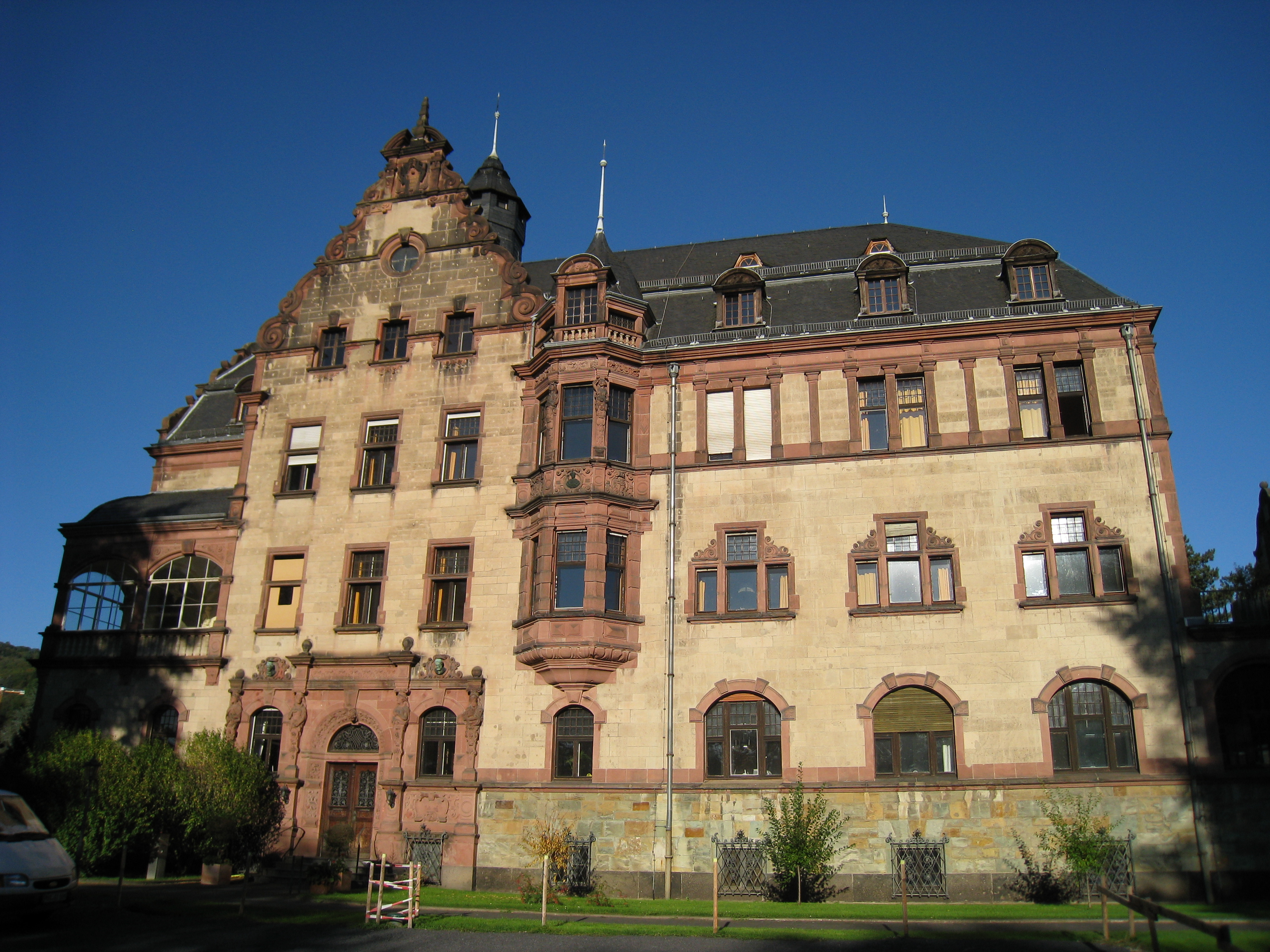
Successful Plasma Summer School in 2020 in an online format
Due to the current situation, this year's summer school did not take place at the usual location of the physics center in Bad Honnef, but online. The regular programme consisting of basic plasma physics lectures combined with a master class on special topics could not take place as usual. Nevertheless, all teachers have agreed to deliver their basic lectures via an online video format. The summer school was extended to two weeks with two lectures per day. This year more people were able to tune in, because the online format is much easier to reach from regions with limited travel possibilities.
The lectures were technically flawless and the feedback from students and teachers was very positive. Many discussions and interactions could be made possible due to the high commitment of all teachers. Two practical workshops were also held by L. L. Alves on solving the Boltzmann equation and by N. Braithwaite on analyzing the Paschen curve.
We hope for another summer school in 2021, then again in the facilities of the physics center in Bad Honnef. The latest information on the planning for 2021 will be published at the summer school homepage in March 2021.
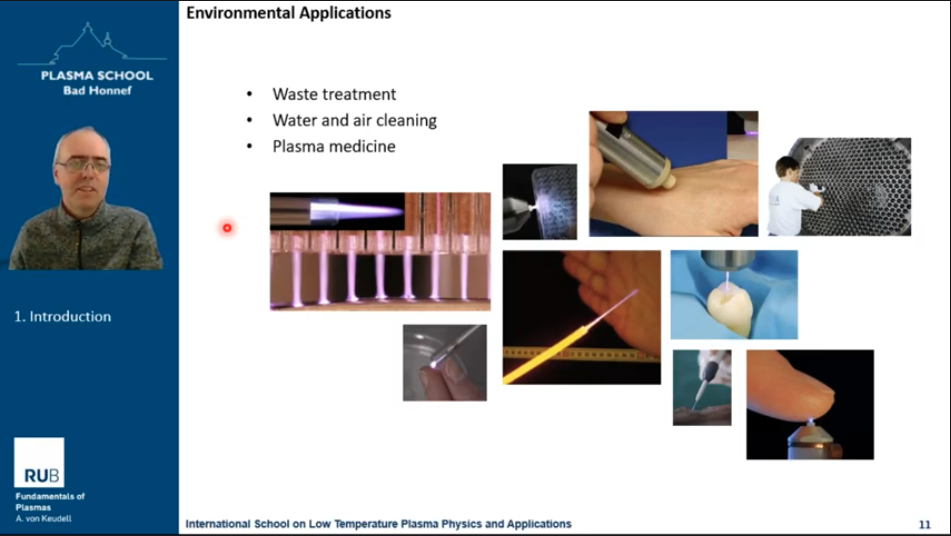
Online Plasma Summer School in 2020
Although the situation regarding the Covid 19 pandemic is affecting our day-to-day business at the moment, we are trying to plan the upcoming International Low Temperature Plasma Physics School for October 2020. Therefore, the 24th International Plasma School on "Low Temperature Plasma Physics: Fundamentals and Applications" (October 3-8, 2020) will be an online course over two weeks (October 5-16, 2020). Unfortunately, the Master Class "Spectroscopy" for 2020 has to be cancelled. However, this master class will have been held during the next school in 2021.
Lukas Mai and colleagues on new chemistry for ultra-thin gas sensors
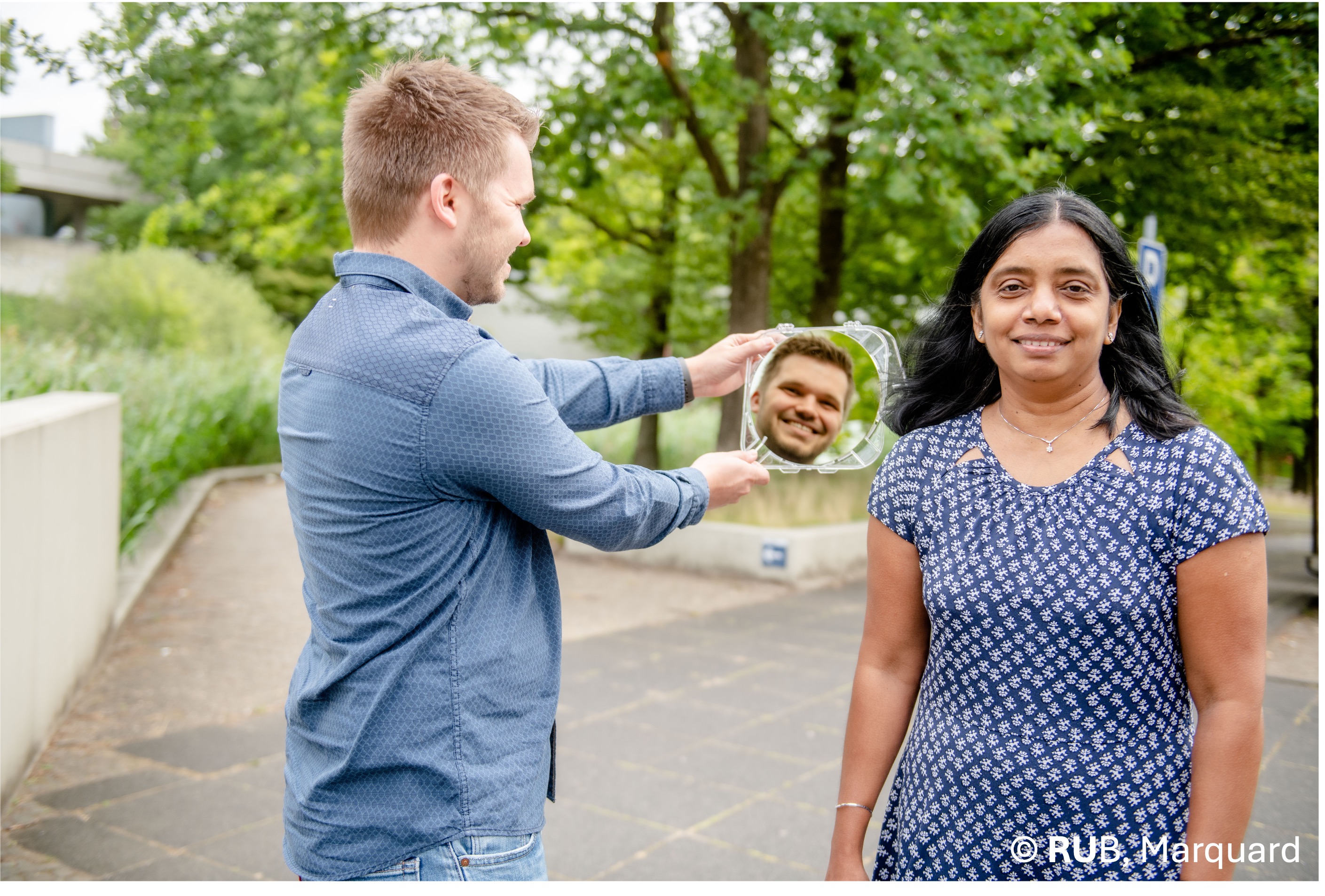 A Bochum team has developed a new process for zinc oxide coatings that can be used in nitrogen oxide sensors and as protective coatings on plastics.
The application of zinc oxide coatings in industry is manifold and ranges from the protection of perishable goods from air to the detection of toxic nitrogen oxides. Such layers can be produced by means of atomic layer deposition (ALD), which normally uses precursor chemicals, so-called precursors, which ignite immediately in air. An interdisciplinary research team at the Ruhr-Universität Bochum (RUB) has now established a new production process based on non-self-igniting precursors that takes place at such low temperatures that plastics can also be coated. The team reported in the magazine "Small", which selected the article for its title in the issue of 4 June 2020.
Applying ultra-thin coatings
To produce a sensor for nitrogen dioxide (NO2), a thin layer of nanostructured zinc oxide (ZnO) must be applied to a sensor substrate and then integrated into an electrical component. Prof. Dr. Anjana Devi's team used ALD to apply ultra-thin ZnO layers to such sensor substrates.
In general, ALD processes are used in industry to miniaturize electrical components by means of ultra-thin layers, some of which are only a few atomic layers thick, while at the same time increasing the efficiency. This requires precursors that react on a surface in the ALD process to form a thin layer. "The chemistry behind ALD processes is therefore essential and has a great influence on the resulting layers," emphasizes Anjana Devi.
Safe handling and highest quality
In industry, ZnO coatings have so far been produced with an extremely reactive zinc precursor that ignites immediately in air, experts call it pyrophoric. "The key to developing a safe ALD process was to research a new, non-pyrophoric precursor that can be handled safely and is capable of producing ZnO coatings of the highest quality," said Lukas Mai, lead author of the study. "The challenge was to find an alternative chemistry capable of replacing pyrophoric, industrially used compounds".
The special feature of the new process is that it is even possible at low temperatures, which makes it possible to coat plastics. Thus, the new process is not only suitable for the production of gas sensors, but also for gas barrier layers. These are applied to plastic in industry and are used to protect sensitive goods such as food and medicines from air.
This was made possible by the interdisciplinary cooperation of natural scientists and engineers. The team included the working groups Chemistry of Inorganic Materials headed by Anjana Devi and General Electrical Engineering and Plasma Technology headed by Prof. Dr. Peter Awakowicz, researchers from Heinrich Heine University Düsseldorf and the company Paragon.
The work was funded by the European Fund for Regional Development (EFRE) in the Funald project and by the German Research Foundation in the framework of the Collaborative Research Centre/Transregional TR87. Lukas Mai was supported by the Stiftung der Deutschen Wirtschaft.
adapted from Meike Drießen, RUB
International School on Low Temperature Plasma Physics 2020
Due to the situation with Covid-19, the Plasma School will be an online course lasting over two weeks (October 5th until October 16th, 2020). Unfortunately, the Master Class “Spectroscopy” has to be cancelled for 2020. However, this Master Class will take place during the next school in 2021.
Since all teachers of the school confirmed their participation also in an online format, we changed the schedule, so that the intensity of the courses will be comfortable for the participants. Some of the courses will be online in advance, so that you can decide when to watch the videos. Other teachers prefer to do their courses live, so there will be a defined time slot to watch the lectures. However, all teacher of the corresponding day will be available online for Q & A discussions in the afternoon. The school will be free of charge for all participants.
In order to guarantee an optimal interaction between teachers and students, we limit the access to the school. Therefore, a registration on the school webpage is necessary with an appropriate motivation text. Please, register until July 15th if you would like to attend the online format of the school. After this date, the organization team will decide about the participants. All previously registered students will of course also be considered for the school's online format.
- For more information, see Homepage Summer School