
A reference source for plasma research
The areas of application for plasmas seem inexhaustible. In biomedicine, for example, the technology promises to heal chronic wounds better, kill antibiotic-resistant germs or treat cancer cells selectively. “There are many studies that show that plasmas could be useful for these applications,” says Professor Judith Golda, research physicist in Collaborative Research Centre 1316. “But in order to use plasmas for these purposes, we need to understand their underlying mechanisms.”
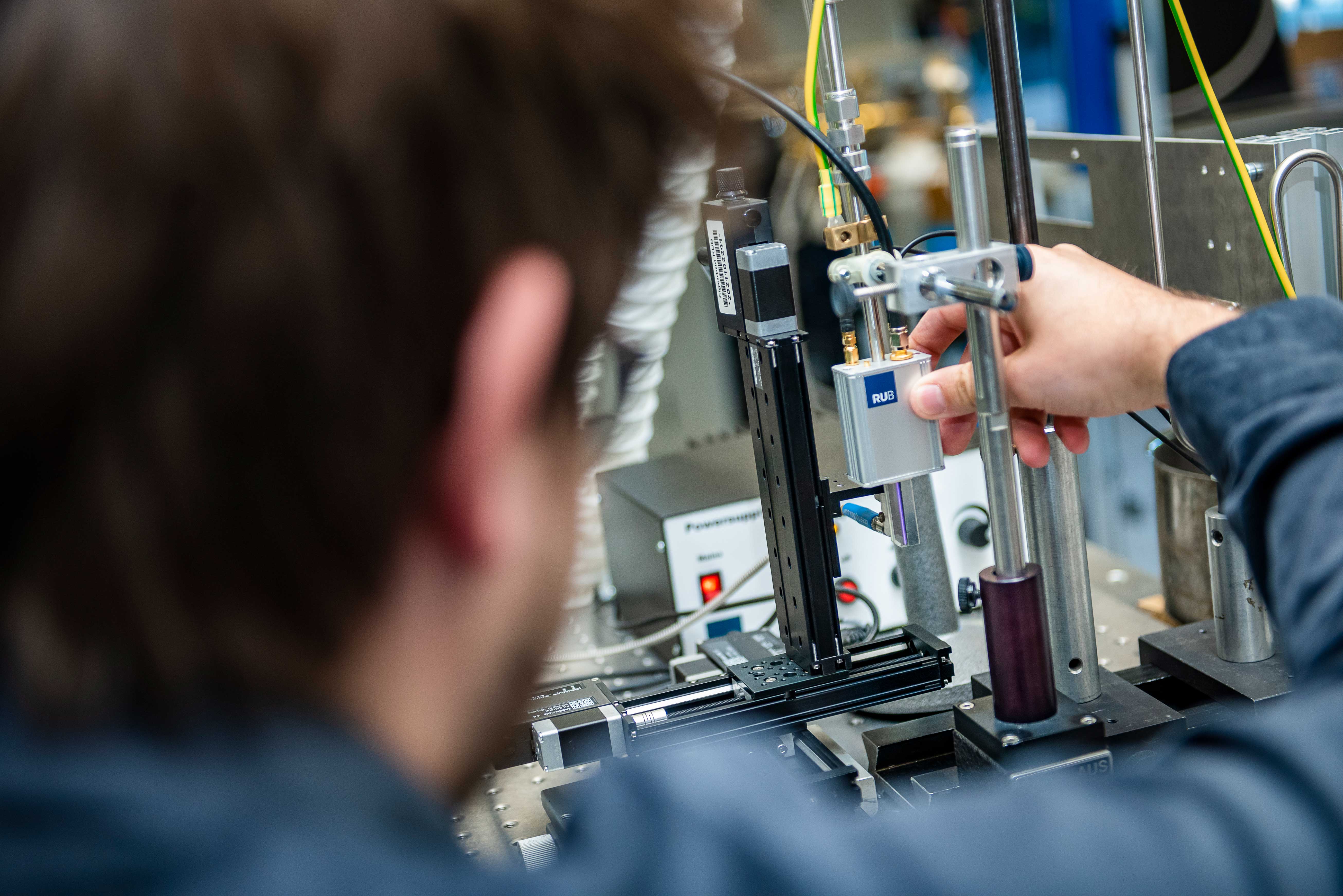
One problem is that while many studies have been done over the years, the techniques have not been comparable. “Making a plasma at atmospheric pressure is easy,” Golda explains. “All you really need are two wires to which you apply a voltage so that an electric field is created that ionises the gas between the wires.” Because it’s so easy, many research groups have built their own plasma sources. But not all plasma is the same. There are many properties that determine how suitable a plasma is for a particular purpose, such as the strength of the electric fields or the type and quantity of reactive particles it contains.
Complex plasma physics meets complex biological processes
Since both plasma physics and the biological processes that researchers want to manipulate with plasmas are very complex, it is difficult to explain the observed effects of plasma treatments mechanistically given the large number of variable parameters in plasma. In the early 2010s, therefore, the idea arose to develop a reference source, i.e. a plasma whose properties are precisely characterised and which can be reproduced with exactly these properties. The hope was that if different research groups used this plasma, they would know exactly which plasma parameters were responsible for certain effects. “Such a reference source already existed for low-pressure plasmas. We now wanted to transfer the concept to atmospheric-pressure plasmas,” recalls Judith Golda, who already worked on this issue while doing her PhD at RUB.
Together with partners from Greifswald, Eindhoven, Milton Keynes, York and Dublin, the Bochum group selected a plasma source that RUB physicist Dr. Volker Schulz-von der Gathen had already studied in-depth. “An important argument in our selection process was that many other groups worldwide have already worked with similar sources. So, we were looking for a plasma that could be used by the majority, so to speak,” explains Judith Golda.
Analyses at five locations yield the same results
The international team characterised the plasma source in detail. In the first step, the RUB researchers built five identical sources so that each cooperation partner could examine the plasma at their own location to ensure that it always had the same properties – which worked out well right away. The work took place within the framework of a funding programme of the European Cooperation in Science and Technology (COST). Thus, the researchers eventually dubbed their source COST-jet. Jet, because the plasma emerges from an opening in the form of a jet.
To make the plasma source available to all research groups worldwide, the project team wrote detailed assembly instructions and published them online at cost-jet.eu, where they can be freely accessed. “However, because it is sometimes not so easy for researchers without prior experience to implement such instructions, we also made sure that the COST-jet could be purchased ready-built at cost price,” points out Judith Golda. Sales are handled by Plasma Applications Consulting, a RUB spin-off.
Reference source deployed worldwide
Many groups worldwide are now using the COST-jet, so the research done by all these groups is comparable. Theoretically working groups complement this research.
“There are, of course, alternative sources,” says Judith Golda. “And they also have their justification, because you need different plasmas depending on the application.” Nevertheless, the research physicist is pleased that the reference plasma developed in Bochum is deployed at many plasma research locations around the world.
At RUB, too, research is ongoing in this field under the umbrella of the plasma Collaborative Research Centres. Groups from the fields of physics and electrical engineering are cooperating, for example, to understand in detail which reactive species form in the COST-jet and how their quantity changes with increasing distance from the source. “Depending on which gas you use, up to 1,000 different reactions can take place in a plasma in quick succession, because the reactive species interact in many combinations,” outlines Golda. The COST-jet is based on the noble gases helium and argon with small admixtures of other gases, for example oxygen and nitrogen. If these are dissociated and ionised in the electric fields, the atoms can take on all kinds of reactive forms: Oxygen, for example, can exist as a positively (O+) or negatively charged ion (O-), as a neutral atom (O), as molecular oxygen (O2) or ozone (O3). If nitrogen (N) is added to the mixture, numerous other combinations quickly emerge, for example NO, N2O, NO2 and others. “The reaction chemistry literally explodes,” as Golda describes the process.
Spectroscopic analysis of reactive species
The Bochum-based researchers were interested, for example, in how many reactive oxygen atoms are produced in the COST-jet and how their quantity decreases with increasing distance from the source. “Since many biological systems need a certain volume of atomic oxygen, plasma treatments with reactive oxygen species can have positive effects,” elaborates Judith Golda. “But sometimes it can be too much oxygen.” According to her, it is therefore important to know exactly how much reactive oxygen is present in the plasma and what the optimal distance from the target surface to the plasma would be. “This is the only way to later develop applications that are also safe for patients,” says the researcher.
Spectroscopy was used to make the necessary measurements. In the process, the researchers transmit laser light of a specific wavelength into the plasma. This light is absorbed by the oxygen particles, raising them to a higher energy level. After a while, they return to their ground state, emitting light of a certain wavelength, which the researchers can measure. The emitted wavelength depends on the particle that emits the light; a neutral oxygen atom, for example, sends back different light than a positively charged oxygen ion. Based on the amount of light emitted at certain wavelengths, the researchers can thus deduce the amount of different oxygen species.
We know pretty much what comes out of the source – that is only the case with a few sources.
– Judith Golda
This is how the team found that the amount of oxygen atoms in the plasma decreases exponentially as the distance from the source increases. Using analytical models, they also showed why this is the case. “Because the particles are so reactive, they quickly react further to form other compounds, such as molecular oxygen or ozone,” explains Judith Golda. The team is also researching the reactive species that result from adding nitrogen to the source, for example nitrogen monoxide (NO). This is particularly interesting for the researchers, because NO also occurs in the human body as a messenger substance and is important for wound healing. For example, they determine the flow pattern of NO molecules when they hit a surface from the plasma source.
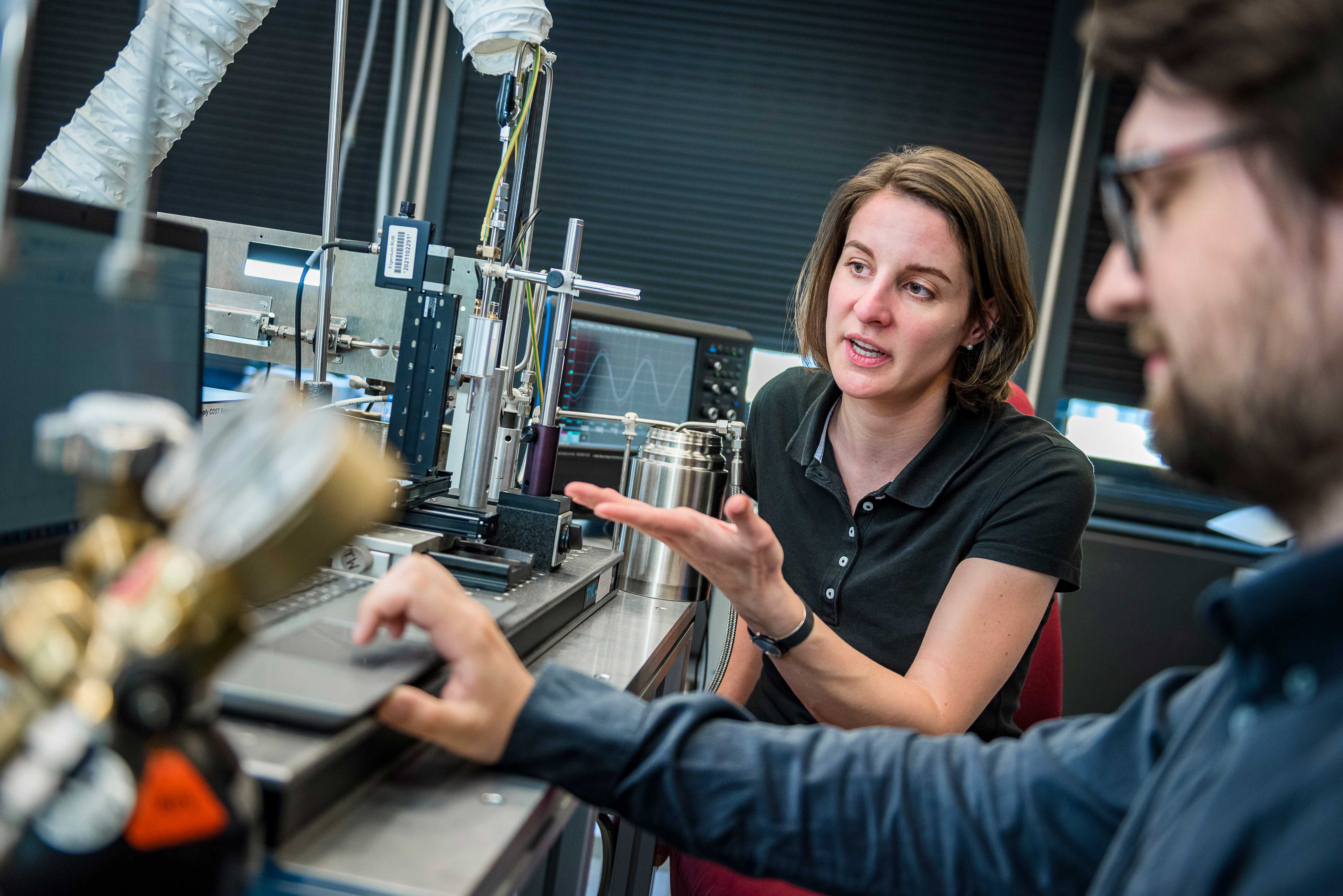
Overall, the COST-jet is already very well characterised, according to Judith Golda. “We know pretty much what comes out of the source – that is only the case with a few sources,” she says.
adapted from Julia Weiler (RUB)
Achieving success together
One of the most interesting and important features of plasma medicine as a topic is its interdisciplinary nature, bringing together natural scientists, engineers and clinicians. The number of different scientific areas represented within the field has been continuously growing in the past ten years. This interdisciplinary environment has been a driving force behind clinical studies in a number of cases, wound treatment being a prominent example.
Over the next ten years, as plasma medicine continues to grow and attract new researchers, I expect this trend to accelerate and for the field to become even more interdisciplinary than it is today. This will bring new perspectives on existing questions, new therapeutic concepts, and novel research methods. I believe that these factors will be crucial for new scientific discoveries and the translation of emerging approaches such as plasma-based cancer therapy, into clinical practice.
by Julia Weiler (RUB)
Plasmas for all
Driving the plasma van to school
For many years, the plasma researchers at RUB have been committed to introducing plasmas to school students in different year groups. “Physics teachers sometimes conduct experiments that involve plasmas, but the word plasma doesn’t even appear in the curriculum,” explains Science Manager Dr. Marina Prenzel. In order to familiarise secondary school students with the concept of a plasma, the SFB team, in cooperation with Professor Heiko Krabbe and other physics didactics experts, has constructed various plasma experiments that can be stowed away in boxes and handily transported in a minibus. The researchers use them for interesting 90-minute workshops in sixth-form classes, where students can do their own experiments and learn about different applications of plasmas. “This is how we want to create awareness that plasmas are extremely important for many of our current technologies,” says Prenzel.
Students evaluate research projects
Students should not only be given the chance to learn what a plasma actually is and where it is used. Rather, the SFB team is also currently setting up a project in collaboration with the physics didactics department that aims at promoting the evaluation skills of adolescents and young adults. Here, students are to gain insights into various plasma research projects and evaluate which of these projects they would support. Another goal is to convey the significance of plasmas for the challenges of global warming.
More than 20 years of plasma summer school
For more than 20 years, plasma researchers at RUB have been organising an annual international summer school for Master’s students and doctoral candidates. It originally emerged from a European Erasmus project, acquired under the auspices of the Eindhoven University of Technology. When the funding ran out in 2000, the RUB team dedicated itself to continuing it. “The school is practically always overbooked,” says co-organiser Dr. Marc Böke. The 80 to 90 participants each year and the lecturers come from all over the world. The aim of the seven-day school is to give them insights into all the major technically relevant plasmas and, at the same time, to enable them to network with each other and with established researchers in the field. “Some of the former participants are now themselves running plasma labs,” says Böke. The RUB team hopes to resume the successful format soon, despite the coronavirus situation.
Virtual tours through plasma labs
Even though direct contact with the public is very limited during the coronavirus pandemic, the SFB team came up with a solution: The researchers made 360-degree recordings of their laboratories. This means that not only school classes, but also interested members of the public have the opportunity to take part in guided tours of the laboratories.
On 27 October 2021, the SFB 1316 team offers a virtual public tour free of charge. Registration is possible via email (
adapted from Julia Weiler (RUB)
Using plasma and electrolysis for CO2recycling
The plasma ignites with a bright flash and tears through the water for a few billionths of a second. Dr. Katharina Grosse from Collaborative Research Centre 1316 “Transient atmospheric plasmas – from plasmas to liquids to solids” (RUB) takes spectacular pictures that show the ignition process of plasma under water at high temporal resolution. Delivering the first data sets with very high temporal resolution, the researcher supports a hypothesis on the ignition of these plasmas: there is not enough time in the nanosecond range to form a gas environment. The nanosecond plasma ignites directly in the liquid. The particles created during ignition can interact efficiently with catalytic surfaces.
But how does the plasma ignite in these short time scales? What happens afterwards? Which substances are produced? And how is this ignition in the liquid possible in the first place? In her doctoral thesis, physicist Grosse explores these very questions. To this end, she applies a high voltage to a hair-thin electrode immersed in water for ten nanoseconds. The strong electric field thus generated leads to the ignition of the plasma. Using high-speed optical spectroscopy in combination with modelling of the fluid dynamics, the Bochum-based researcher is able to predict power, pressure and temperature in these underwater plasmas and, consequently, to explain the ignition process and plasma development in the nanosecond range.
Hotter than the sun
This is what she has observed: at the time of ignition, extreme conditions exist in the water. For a short time, pressures of many thousands bar are created; this corresponds to or even exceeds the pressure at the deepest point in the Pacific Ocean, as well as temperatures of many thousands degrees, similar to the surface temperature of the sun. “In addition, a power of several 100 kilowatts is consumed in the plasmas for a short time, which more or less equals the connected load of several single-family houses,” explains Professor Achim von Keudell, Grosse’s doctoral supervisor and head of the Institute for Experimental Physics II.
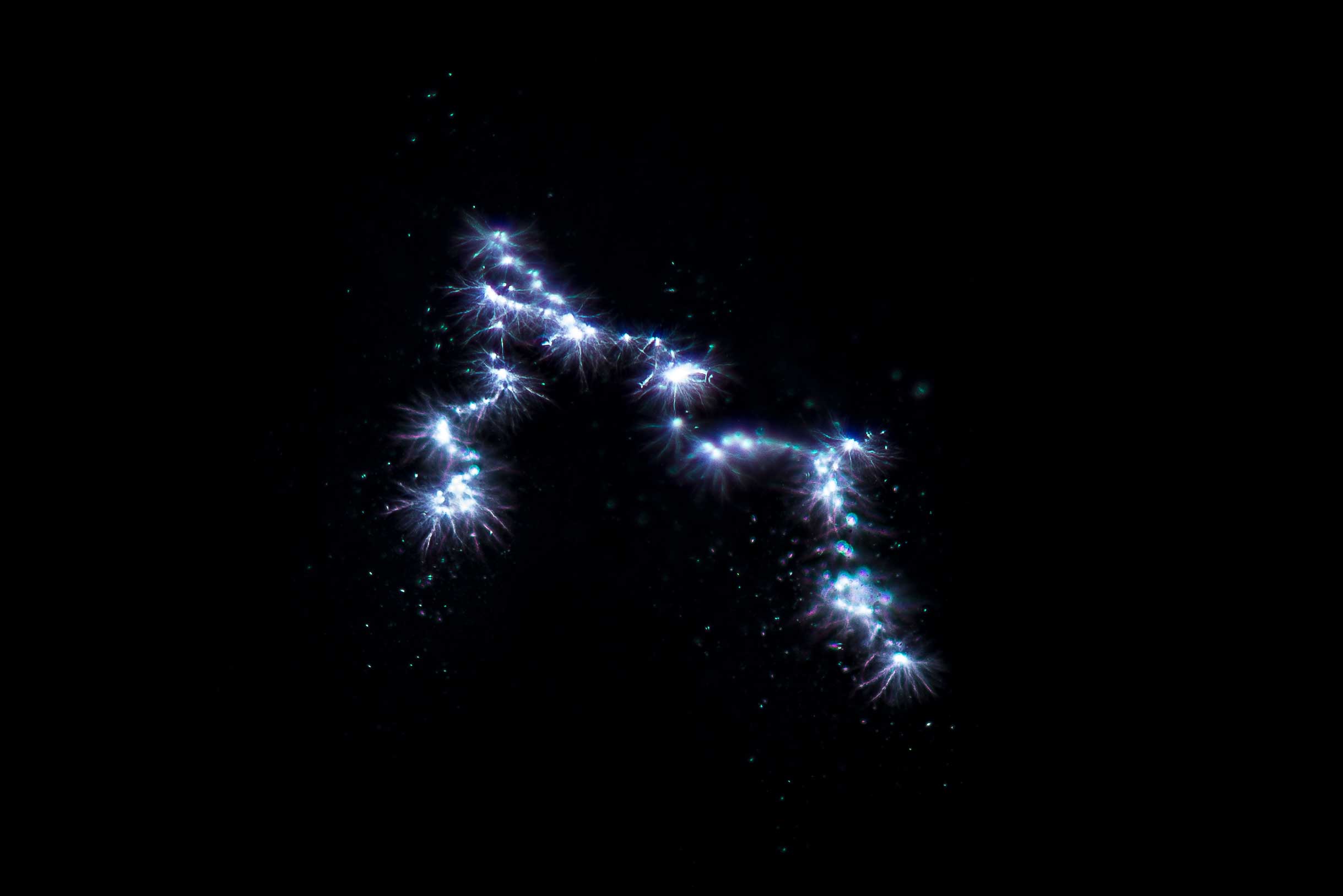
To achieve these measurement results, a complicated setup is necessary, which Katharina Grosse spent roughly a year on developing: “The electromagnetic interference is very strong and affects all measurement electronics. We had to build a large metal cage around the plasma chamber to bypass this source of interference. Another difficulty was to ensure the simultaneity of spectroscopic measurement and camera recording.”
Rendering plasma development visible
The tinkering has paid off: it is now possible to observe the plasma development very precisely. The recordings call into question the theory that has been common so far. Until now, this theory assumed that a high negative pressure difference forms at the tip of the electrode, which leads to the formation of very small cracks in the liquid with expansions in the nanometre range, in which the plasma can then spread. “It was assumed that an electron avalanche forms in the cracks under water, enabling the ignition of the plasma,” says von Keudell. However, the images taken by the research team from Bochum suggest that the plasma is “ignited locally within the liquid,” explains Grosse.
Tunnel effect under water
In her attempt to explain this phenomenon, the physicist uses the quantum-mechanics tunnel effect. This describes the fact that particles are able to cross an energy barrier that they should not be able to cross according to the laws of conventional physics, because they do not have enough energy to do so. “If you look at the recordings of the plasma ignition, everything indicates that individual electrons tunnel through the energy barrier of the water molecules to the electrode, where they ignite the plasma locally, i.e. precisely where the electric field is highest,” says Grosse. This theory has a lot going for it and is the subject of much discussion among experts. Subsequent experiments with negative pulses are to support Grosse’s tunnel theory.
Water is broken down into its components
The ignition process under water is as fascinating as the results of the chemical reaction are promising for practical applications. The emission spectra show that, at nanosecond pulses, the water molecules no longer have the opportunity to compensate for the pressure of the plasma. The plasma ignition breaks them down into their components, namely atomic hydrogen and oxygen. The latter reacts readily with surfaces. And this is precisely where the great potential lies, explains physicist Grosse: “The released oxygen can potentially re-oxidise catalytic surfaces in electrochemical cells so that they are regenerated and once again fully develop their catalytic activity.”
Underwater plasmas and electrolysis
How exactly is this going to be achieved? Can plasma and electrolysis be combined? RUB PhD student and chemist Philipp Grosse is looking for answers to these questions at the Fritz Haber Institute of the Max Planck Society in Berlin. “Electrochemical cells,” he explains, “help, for example, to reduce, recycle and convert carbon dioxide into useful chemicals. This requires a catalyst. However, during the electrochemical process, the catalytic surfaces wear out and lose their catalytic capabilities.” This is where the underwater plasmas studied by Katharina Grosse could provide a remedy and be used for material conversion at the electrode-liquid interface.
The brother and sister team intends to find out in what way underwater plasmas can be used in the electrolysis of chemical substances. How can the plasmas support electrolysis by changing the liquid and the electrode surface? How does plasma interact with the electrochemical cell? For this purpose, Katharina Grosse is setting up her experimental setup in Berlin, where her brother Philipp has been conducting research for two years. Instead of water, they use electrolytes as liquids, and a catalytic surface is built directly into the plasma chamber. The Grosses decided to use copper oxide in the form of nanocubes as a catalyst. These are nanometre-sized copper oxide cubes that are used as a catalyst for CO2 reduction. They then apply a high voltage to the electrode for a few microseconds. A plasma ignites. The changes observed in the copper cubes suggest that the oxygen produced by the plasma ignition activates the copper oxide. The initial measurements imply that the extreme plasma is indeed able to re-oxidise the copper cubes and thus regenerate the catalytic surface. Once the catalyst is ready for use again, the electrochemical cell should also work, and with it the CO2 reutilisation process. This would allow CO2 to be continuously converted into other products in industrial plants; the cycle would thus be closed.
The dream of an infinite electrochemical cell
In Bochum and Berlin, the researchers are already dreaming of an infinite electrochemical cell in which electrochemical processes alternate with plasma ignitions. But the Grosses still have a long and complicated way ahead of them. The greatest challenge at present is to combine the physical with the chemical structure so that plasma ignition and electrolysis can take place simultaneously.
The future of plasma technology
Should this succeed, it would be a “milestone, a technology with a lot of potential,” stresses von Keudell. The chemical industry is very interested in such a plasma process, according to the spokesman for the Collaborative Research Centre: “They have high hopes for the electrification of the chemical industry.” The advantages of plasma technology: it takes up little space, and the electrical energy can support the conversion of chemical substances at the push of a button.
adapted from Julia Weiler (RUB)