
PD Dr. Dominik Bomas, Astronomical Institute
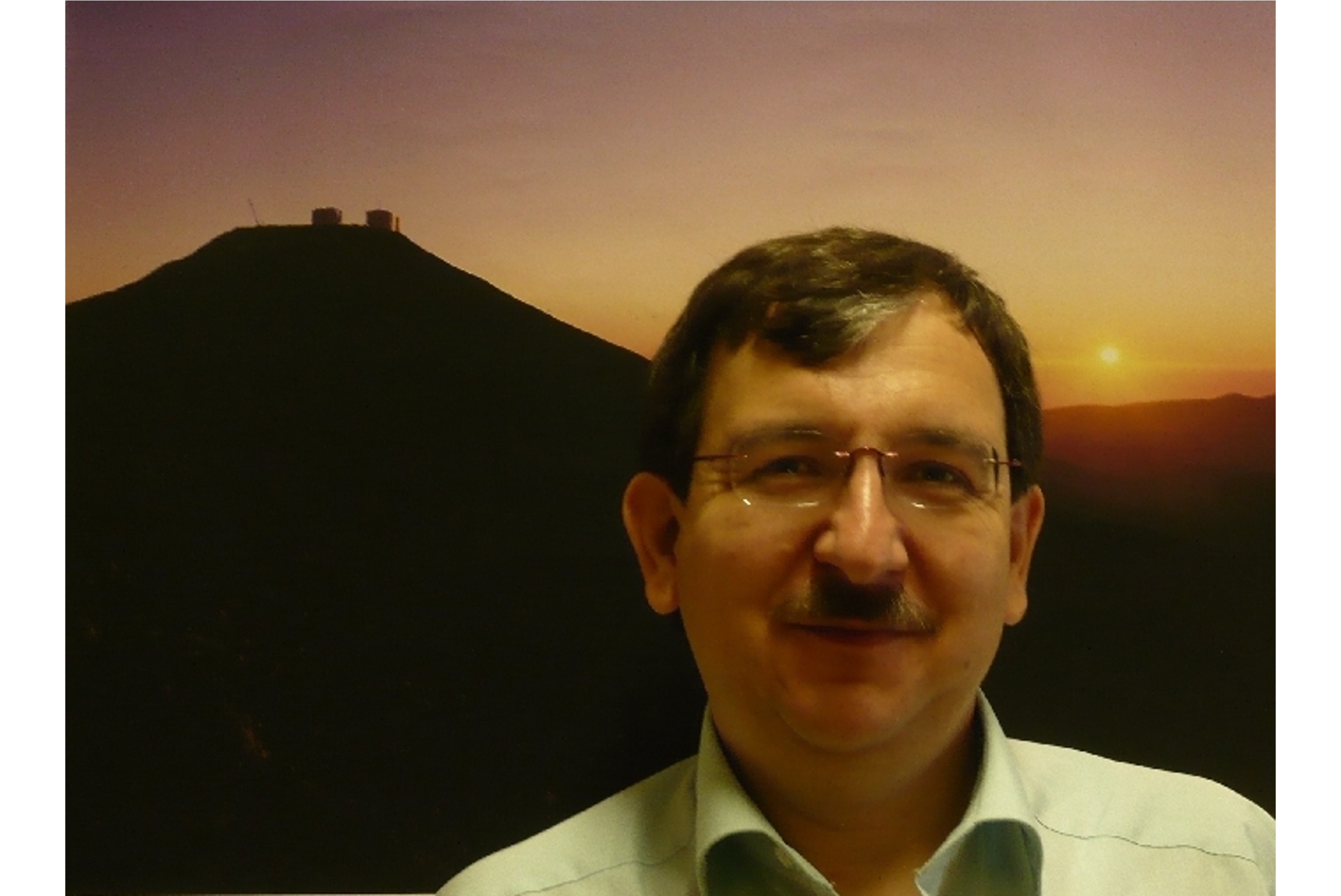 The research is focused on astrophysical plasma in interstellar and intergalactic space. Using multi-wavelength (UV, optical, IR, radio, and X-ray) space and ground based photometry and spectroscopy the physical state of the plasma is determined. This gives the ionization, heating, cooling, heavy element content, magnetization, and kin-ematics of the astrophysical plasma. With these measurements the stellar (radiative and mechanical) feedback on various spatial scales, from circumstellar to circumgalactic and intergalactic medium, can be determined. The analyses provide essential physical parameters for the understanding of dwarf and massive galaxy formation and evolution.
Keywords: interstellar plasma, circum/intergalactic plasma, magnetized astrophysical plasma, stellar feedback, galaxy evolution
Webpage: Astronomical Institute
ORCID: 0000-0001-5126-5365
Prof. Dr.-Ing. Peter Awakowicz, Chair for Electrical Engineering and Plasma Technology
 A diverse spectrum of research is addressed. It includes atmospheric pressure plasmas combined with catalysts for air and gas purification (e.g., CRC 1316, Carbon2Chem) or atmospheric pressure plasmas for the deposition of light metal oxides. Furthermore, atmospheric pressure plasmas for disinfection and sterilisation, wound healing, cancer treatment (PlasNow) are investigated. Another research focus are low pressure plasmas for deposition of SiO2 layers on plastics for barrier and membrane applications or Low-pressure plasmas for the deposition of metal oxynitrides (SFB-TR 87). Finally, quantitative plasma diagnostics with optical, mass spectrometric and electrical methods realized within the research institute.
Keywords: Electrical engineering, low pressure plasmas, atmospheric pressure plasmas, plasma deposition
Webpage: Chair of Electrical Engineeringd and Plasma Technology
ORCID: 0000-0002-8630-9900
Dr. Volker Schulz-von der Gathen, Chair of Experimental Physics II
The continuing main topic of the research is the diagnostics of basic parameters of low temperature plasma dis-charges. Here the goal is to provide absolute numbers of parameters based on careful examination of the diagnos-tics itself. The provision of these well-funded numbers is to understand the ongoing processes in plasmas. Since in complex and reactive plasmas as investigated in the plasma medicine project (PLASNOW) this can only be done in combination with modeling and simulation efforts. The goal is the generation of references. The main diagnostics applied are recently laser based optical diagnostics as absorption and laser-induced fluorescence spectroscopy in various flavors. This is accompanied by optical emission spectroscopy with high spatial and temporal resolution. Both diagnostics are applied as well in atmospheric (CRC 1316) as in low pressure (HIPIMS discharge) plasmas. The atmospheric discharges namely a jet and a microplasma array device yield specific challenges due to their small dimensions. Here other diagnostics as current/ voltage or probe measurements that typically add to the understanding of the plasmas cannot always be applied. To ascertain the stability and reproducibility of results we developed in cooperation with partners a reference device the so-called COST jet that is now operated in about 10 laboratories around the world or a decomposable microplasma array device.
Keywords: active and passive optical diagnostics, reproducible reference values, rf plasma jet (COST jet), microplasma array
Webpage: Experimental Physics II
ORCID: 0000-0002-7182-3253
Prof. Dr. Achim von Keudell, Cchair of Experimental Physics II
 The research is focused on reactive plasmas and their interaction with surfaces. By employing optical diagnostics, mass spectrometry, surface analysis and unique particle beam experiments his team studies non-equilibrium processes in the plasma and heterogeneous surface reactions at the plasma boundary. Current topics are high power impulse magnetron sputtering and plasma supported reactive chemical vapor deposition for the synthesis of metastable and/or novel materials, non-equilibrium plasma chemistry combined with catalytically active surfaces and plasmas in liquids to support electrolysis for topics such as CO2 splitting and conversion.
Keywords: reactive plasmas, plasma chemistry, energy conversion, material synthesis
Webpage: Experimental Physics II
ORCID: 0000-0003-3887-9359
Prof. Dr. Judith Golda, Plasma Interface Physics
 The focus of our research group is on the interaction of non-equilibrium plasmas with surfaces. We are interested in the fundamental processes between plasma components and treated substrates as well as possible synergistic effects. For the analysis, we use both plasma and surface diagnostics such as electrical measurements, optical (VUV/visible/infrared) emission and laser absorption spectroscopy, XPS and optical microscopy. We place great emphasis on backing up our complex experiments with simple model calculations and making them comparable for simulations.
Current research topics are charge effects of dielectric barrier surface discharges, the interaction and self-organization of plasma-treated surfaces under the influence of laser radiation and the use of plasmas in biocataly-sis and medical applications.
Keywords: plasma interface, non-equilibrium plasma physics, plasma diagnostics, plasma catalysis
Webpage: Plasma Interface Physics
ORCID: 0000-0003-2344-2146